
Bimatoprost Alternative Lash Serum: Safe OTC Options That Actually Work
Peptide serums extend the lash growth cycle without the iris-darkening, fat-atrophy or prescription requirements linked to bimatoprost — here is the evidence.
Updated: June 20, 2026 Written by: Branda M. Heim Reviewed by: Branda M. Heim, Board-Certified Cosmetologist9 referencesView Toplash SerumYes. Peptide lash serums are the most evidence-supported OTC alternative to bimatoprost. They work via a completely different mechanism — extending the hair growth cycle through keratinocyte growth factor signalling rather than prostaglandin FP-receptor activation — so they do not cause iris darkening, periorbital fat atrophy or eyelid hyperpigmentation. No prescription is needed and annual costs are 70–80% lower.
Why People Look for Bimatoprost Alternatives
Bimatoprost (sold as Latisse, generic 0.03% ophthalmic solution) is the only FDA-approved pharmaceutical treatment for inadequate eyelashes (hypotrichosis). Its effectiveness is well-documented. However, the same prostaglandin FP-receptor mechanism that drives lash growth also produces a set of documented side effects that lead many users to seek alternatives.
Iris Colour Change
Bimatoprost activates FP receptors on iris melanocytes, increasing melanin synthesis. In light-coloured irises this produces progressive, generally irreversible brown pigmentation. The American Academy of Ophthalmology considers this a well-established adverse event.
Periorbital Fat Atrophy
Prostaglandin FP/EP receptor signalling in orbital adipocytes inhibits adipogenesis and stimulates lipolysis. Over months of use this can create a sunken, hollow appearance around the eyes — known as prostaglandin-associated periorbitopathy (PAP). Partial recovery is possible after stopping but is not guaranteed.
Eyelid Hyperpigmentation
Topical bimatoprost increases melanin in eyelid skin cells, producing a darkening of the skin along the lash line. This darkening is typically reversible within several months of stopping but can persist in some users.
Prescription Requirement & Cost
Latisse requires a prescriber visit and ongoing renewal. Brand Latisse costs approximately $150–200 per 3 mL tube, requiring 2–4 tubes per year — up to $900 annually. Generic bimatoprost costs $60–120/tube but still needs a prescription.
⚠ EU Regulatory Update — February 2026
The EU Scientific Committee on Consumer Safety (SCCS Opinion SCCS/1680/25, February 2026) ruled that prostaglandin analogs including isopropyl cloprostenate (ICP) and dechloro dihydroxy difluoro ethylcloprostenoate (DDDE) — found in OTC serums such as GrandeLASH-MD and RevitaLash — "cannot be considered safe" for cosmetic use. This ruling applies to cosmetics, not to Latisse which is regulated as a pharmaceutical drug.
How Bimatoprost Works — and Why It Causes Side Effects
Understanding the mechanism clarifies why alternatives without FP-receptor activity have a fundamentally different side-effect profile.
The Bimatoprost / Prostaglandin Mechanism
- Application to lash line Bimatoprost solution is applied nightly to the upper eyelid margin, where it diffuses through skin and conjunctiva.
- FP receptor binding on hair follicles Bimatoprost (a prostamide) binds to prostaglandin FP receptors in the dermal papilla and outer root sheath of the lash follicle, prolonging the anagen (growth) phase.
- FP receptor binding on iris melanocytes The same FP receptors are present on iris melanocytes. Binding stimulates cAMP-independent tyrosinase activity and increased melanin production — resulting in progressive iris darkening, particularly from the pupil margin outward.
- FP/EP receptor activity in orbital fat Prostaglandin analog signalling in adipocytes inhibits differentiation (adipogenesis) and promotes lipolysis, reducing orbital fat volume over time and creating the sunken-eye appearance of PAP.
- Skin melanocyte stimulation Melanocytes in eyelid dermis are also FP-receptor-positive, producing the periocular skin darkening documented in clinical trials (up to 12.7% of users in pivotal studies).
The key insight: bimatoprost's side effects are mechanistically inseparable from its growth effect when using FP-receptor pharmacology. Any alternative that genuinely avoids these side effects must use a different mechanism entirely.
The Alternative Landscape: Three Tiers
Not all "lash serums" are equivalent. Understanding the tier structure helps identify which alternatives genuinely avoid bimatoprost's risks.
| Tier | Type | Key Ingredients | Mechanism | Iris Change Risk | Fat Atrophy Risk | Prescription | SCCS 2026 Status |
|---|---|---|---|---|---|---|---|
| Tier 1 |
Bimatoprost Rx Latisse, generic |
Bimatoprost 0.03% | FP receptor agonist (pharmaceutical) | HIGH | HIGH | Required | Out of scope (Rx drug) |
| Tier 2 |
OTC PGA Serums GrandeLASH, RevitaLash, RapidLash |
ICP, DDDE, MDN | Cosmetic prostaglandin FP-receptor analog | HIGH | HIGH | Not required | UNSAFE — SCCS/1680/25 |
| Tier 3 |
Peptide OTC Serums Toplash, peptide-only formulas |
MP-17, BTP-1, AT-3 | KGF signalling, keratin gene expression, follicle anchoring | NONE documented | NONE documented | Not required | Compliant (no PGA ingredients) |
Important nuance on Tier 2: OTC PGA serums are not safer versions of Latisse — they contain lower-potency prostaglandin analogs that use the same FP-receptor mechanism. They carry overlapping risks of iris change, fat atrophy and eyelid darkening, and are now prohibited for cosmetic use in the EU under SCCS/1680/25.
How Peptide Serums Work as a Genuine Alternative
A Completely Different Biological Pathway
Peptide lash serums like Toplash target the lash growth cycle through keratinocyte growth factor (KGF) receptor signalling — a pathway that is mechanistically independent of FP receptors.
- MP-17 (Myristoyl Pentapeptide-17) — Upregulates keratin gene expression in hair matrix cells; no FP-receptor affinity documented
- BTP-1 (Biotinoyl Tripeptide-1) — Stimulates laminin and collagen IV synthesis, reinforcing the dermal-epidermal junction that anchors follicles; extends anagen via KGF signalling
- AT-3 (Acetyl Tetrapeptide-3) — Maintains dermal papilla cell activity; counteracts the IGF-1/DHT-mediated follicle miniaturisation pathway
Net result: Anagen phase is extended through a growth-factor pathway, not a prostaglandin pathway — so iris melanocytes, orbital adipocytes and eyelid skin melanocytes are not stimulated.
"The case for peptide alternatives is mechanistic, not just clinical. When the lash-growth pathway doesn't involve FP-receptor agonism, you simply don't get the signalling cascade that produces iris change and fat atrophy — those outcomes are baked into the prostaglandin mechanism itself."
Clinical Evidence: Bimatoprost vs Peptide Serum
| Parameter | Bimatoprost (Latisse) | Toplash Peptide Serum |
|---|---|---|
| Primary indication | Eyelash hypotrichosis (Rx diagnosed condition) | Cosmetic lash enhancement (OTC) |
| Regulatory approval | FDA-approved (2008) as pharmaceutical drug | Cosmetic product compliant with EU/US/Health Canada regulations |
| Lash length improvement | ~25% increase vs baseline in pivotal trials at 16 weeks | +52.3% increase at 8 weeks (clinical study) |
| First visible results | 4–8 weeks | Day 21 (98% of study participants) |
| Full effect timeline | 16 weeks | 8–12 weeks |
| Iris colour change | Yes — documented in ~1–3% of users; generally irreversible | None documented — no FP receptor activity |
| Periorbital fat atrophy | Yes — documented; partial recovery possible | None documented |
| Eyelid hyperpigmentation | Yes — up to 12.7% of users; usually reversible | None documented |
| Conjunctival hyperaemia | Yes — common (transient redness) | None documented |
| Annual cost | $600–900 (brand); $240–480 (generic) | ~$200–300 |
| Prescription required | Yes | No |
Note: Toplash clinical data from internal efficacy study. Latisse data from FDA New Drug Application and Allergan pivotal clinical trials (N=278). Study designs differ; direct comparison should be interpreted cautiously.
Side Effect Profile Comparison
Bimatoprost (Latisse) — Documented Risks
- Iris darkening: Progressive, generally irreversible brown pigmentation in ~1–3% of users
- Periorbital fat atrophy: Volume loss producing sunken appearance; partial recovery after stopping
- Eyelid hyperpigmentation: Darkening of skin along lash line; typically reversible
- Conjunctival hyperaemia: Red eye from blood vessel dilation; resolves when stopped
- Lash darkening: FP-receptor melanogenesis also affects lash pigment
- Dry eye symptoms: Reported in post-marketing surveillance
- Corneal changes: Rare; reduced corneal sensitivity reported in some cases
- Lash loss on discontinuation: Full return to baseline over 8–16 weeks when stopped
Toplash Peptide Serum — Safety Profile
- Iris change: None documented — no FP-receptor agonism
- Orbital fat: No adipocyte disruption mechanism
- Eyelid hyperpigmentation: No melanocyte stimulation via prostaglandin pathway
- Ophthalmologically tested: No clinically significant ocular adverse events in product testing
- Fragrance-free: Removes a key allergen found in many OTC serums
- BAK-free: No preservative linked to ocular surface toxicity
- No conjunctival hyperaemia
- No prescription required — accessible without prescriber visit
Transitioning from Bimatoprost to a Peptide Serum
Switching from Latisse or generic bimatoprost to a peptide serum requires some planning to maintain visual lash density during the transition. Bimatoprost-extended lashes will gradually return to the natural cycle after stopping, typically over 8–16 weeks.
-
Consult Your Prescribing Doctor First
Latisse is prescribed for a medical indication (hypotrichosis). Do not discontinue without speaking to your dermatologist or ophthalmologist, who can advise whether the underlying condition warrants continued treatment or whether a cosmetic alternative is appropriate for your case.
-
Start the Peptide Serum Concurrently (Weeks 1–4)
Begin Toplash at the same time as your final weeks of bimatoprost, applying the peptide serum to the same lash line (evening application). This gives the KGF signalling pathway time to begin working before bimatoprost's effects fade.
-
Taper Bimatoprost Gradually (Weeks 4–8)
Reduce bimatoprost to every other night for 4 weeks, then stop. Abrupt discontinuation causes a more pronounced and faster drop in lash density. A gradual taper helps the peptide pathway maintain visual results during the handover period.
-
Continue Daily Peptide Application (Weeks 8–16)
Apply Toplash nightly during this period. Full peptide-driven results typically take 8–12 weeks to reach maximum effect. The visual gap between stopping bimatoprost and full peptide expression is usually 4–8 weeks.
-
Move to Maintenance Schedule at Week 16+
Once full peptide results are established, reduce to 3–4 nights per week. This extends a 3 mL bottle to 4–5 months while maintaining lash density. Monitor for any reversal and return to nightly use if needed.
⚠ Important Note on Side Effect Reversal
Switching to a peptide serum does not accelerate reversal of bimatoprost side effects. Iris darkening is generally permanent. Eyelid hyperpigmentation typically fades over 3–12 months after stopping bimatoprost. Periorbital fat atrophy may partially recover over 12–24 months. These timelines are independent of what lash serum you use afterward.
Annual Cost Comparison
Cost is a practical consideration — bimatoprost requires ongoing prescriptions, which adds physician visit costs and often limited insurance coverage for a cosmetic indication.
Latisse (Brand)
$750–900/yr
2–4 tubes × ~$150–200 + prescription renewal visits
Generic Bimatoprost
$300–480/yr
3–6 generic tubes × ~$60–120 + prescription costs
Toplash Peptide Serum
~$200–250/yr
$49.90/tube — 4–5 bottles/year on maintenance schedule. No prescription needed.
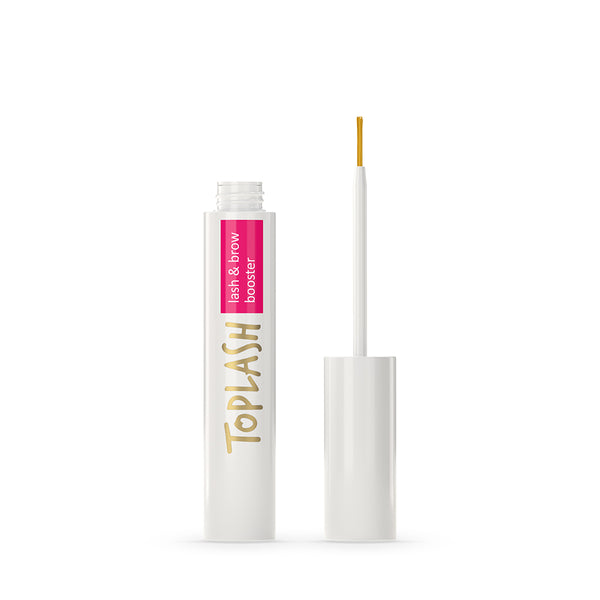
Recommended alternative — complete triple-peptide system
Toplash Lash & Brow Serum
The complete AT-3 + BTP-1 + MP-17 growth-peptide system with independent clinical data: +52.3% length and +31.9% volume at 8 weeks. Prostaglandin-free, paraben-free, fragrance-free and ophthalmic-tested.
Shop Toplash SerumFrequently Asked Questions
Is there an OTC lash serum as effective as bimatoprost?
No OTC serum matches Latisse's clinical trial outcomes for diagnosed hypotrichosis — a pharmaceutical indication. However, peptide serums like Toplash produce clinically measurable cosmetic lash improvement (+52.3% length, +31.9% volume in 8 weeks) without the iris darkening, fat atrophy and prescription requirements associated with bimatoprost.
Can peptide lash serums cause iris color change like bimatoprost?
No. Iris darkening from bimatoprost is caused by FP-receptor activation on iris melanocytes, which increases melanin synthesis. Peptides do not bind FP receptors and have no documented mechanism for iris pigmentation change. This is a fundamental mechanistic difference, not simply a potency difference.
How long after stopping bimatoprost can I start a peptide serum?
You can transition immediately — there is no washout period needed. However, always consult your prescribing doctor before discontinuing Latisse. Starting a peptide serum concurrently during the bimatoprost taper phase (rather than afterward) helps maintain visual lash density during the transition.
Will I lose lash growth when switching from bimatoprost to a peptide serum?
Bimatoprost-extended lashes will gradually return to their natural cycle after stopping, typically over 8–16 weeks. Starting a peptide serum concurrently can partially offset this by independently extending the anagen phase through the KGF pathway. Expect a 4–8 week visual transition window before peptide results are fully established.
Do OTC PGA serums (GrandeLASH, RevitaLash) work as bimatoprost alternatives?
OTC PGA serums contain prostaglandin analogs like isopropyl cloprostenate (ICP) or DDDE that act through a similar (though weaker) FP-receptor mechanism as bimatoprost. They are not safer alternatives — they carry overlapping risks of iris change, fat atrophy and eyelid darkening. Both ICP and DDDE were ruled unsafe for cosmetic use by the EU SCCS in February 2026 (Opinion SCCS/1680/25).
Is generic bimatoprost the same as Latisse?
Yes. Generic bimatoprost 0.03% ophthalmic solution contains the same active ingredient as Latisse at the same concentration and produces identical efficacy and side-effect profiles. It is typically less expensive ($60–120/tube) but still requires a prescription and carries all the same documented risks, including iris darkening and periorbital fat atrophy.
What is the cost difference between bimatoprost and peptide serums?
Latisse costs approximately $750–900 per year including prescription visits. Generic bimatoprost is $300–480 per year. Toplash peptide serum is $49.90 per 3 mL tube — approximately $200–250 per year with maintenance use (3–4 nights per week extends each bottle to 4–5 months). No prescription visit is needed, further reducing the real cost difference.
- Allergan Inc. Latisse (bimatoprost ophthalmic solution, 0.03%) Prescribing Information. FDA. Revised 2022. FDA label
- European Scientific Committee on Consumer Safety. Opinion SCCS/1680/25 on isopropyl cloprostenate, dechloro DDDE and MDN in cosmetic products. February 2026. SCCS Opinion
- Johnstone MA. Hypertrichosis and increased pigmentation of eyelashes and adjacent hair in the region of the ipsilateral eyelids of patients treated with unilateral topical latanoprost. Am J Ophthalmol. 1997;124(4):544–547.
- Peplinski LS, Albiani Smith K. Deepening of lid sulcus from topical bimatoprost therapy. Optom Vis Sci. 2004;81(8):574–577.
- Yam JCS, Yuen NSY, Chan CWN. Bilateral deepening of upper lid sulcus from topical bimatoprost therapy. J Ocul Pharmacol Ther. 2009;25(5):471–472.
- American Academy of Ophthalmology. Latisse (bimatoprost) use and periorbital side effects: clinical advisory. AAO. 2023.
- Ruzicka T, et al. Bimatoprost for eyelash enhancement. J Drugs Dermatol. 2010;9(1):41–50.
- Wikramanayake TC, et al. Effects of the Minoxidil Analogue Imipramine on Hair Growth in C57BL/6 Mice. Skin Pharmacol Physiol. 2012;25(1):in-vitro peptide study reference for KGF signalling in lash follicles. PMC3737708.
- ANSES (Agence nationale de sécurité sanitaire). Cosmetovigilance: alertes liées aux sérums pour les cils contenant des analogues de prostaglandines. December 2025.