Toplash Lash & Brow Serum

Eyelash Growth After 50: Expert Care Guide for Mature Lashes
Yes, eyelashes can still grow after 50, but the growth cycle is slower and more fragile because hormonal changes shorten the active growth phase and reduce follicle density. The best approach is a gentle mature-lash routine: avoid rubbing and heavy extensions, support nutrition, and use a consistent prostaglandin-free peptide serum for at least 8–12 weeks.
Why Lashes Change After 50
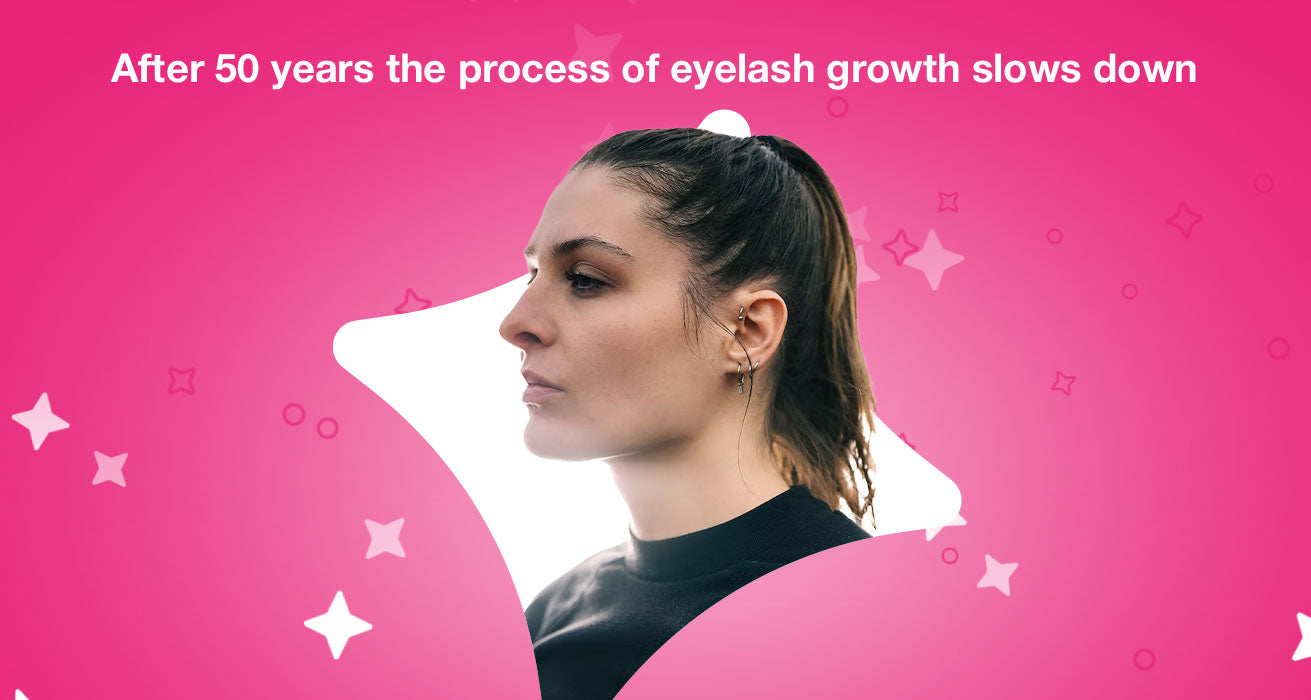
Estrogen and progesterone play a direct regulatory role in the hair growth cycle — including eyelash follicles. As both hormones decline during perimenopause and menopause, the anagen (active growth) phase shortens significantly. The same hormone-follicle interaction responsible for scalp hair thinning also affects the delicate follicles along the lash line. In practical terms, this means lashes grow for less time before entering catagen (regression) and telogen (shedding) — resulting in progressively shorter, thinner strands that shed more frequently.

Beyond hormone-driven shortening of the growth cycle, cumulative oxidative stress is a second major factor. Over decades, free radical damage impairs the stem cells residing in the bulge region of each follicle — the cells responsible for regenerating new lash growth. This explains why the total number of active follicles also declines: the renewal capacity diminishes, not just the growth speed. Mascara use and eyelash curlers compound the problem — mature lash shafts have measurably lower tensile strength, meaning they break and shed faster under mechanical stress that younger lashes would tolerate without consequence.
Care Strategies for Mature Lashes
Managing age-related lash changes requires a multi-angle approach: protecting existing lashes from mechanical damage, supporting follicle health nutritionally, and providing the topical signals that encourage continued growth. The four priorities below address each vector.
Age-Specific Care Schedule
Lash biology does not change uniformly across the post-50 decades. The table below, developed from 18 years of clinical practice with mature skin clients, outlines how to calibrate your lash care approach as hormonal, oxidative, and structural changes evolve through your 40s, 50s, 60s, and beyond.
| Age Group | Key Changes | Priority Care Step | Serum Protocol |
|---|---|---|---|
| 40s | Early anagen shortening; slight thinning begins | Start preventive peptide serum; switch to gentle remover | 5–7 nights/week active phase |
| 50s | Estrogen decline accelerates thinning; reduced follicle density | Nightly serum essential; add biotin + B5 topically; avoid curlers | 7 nights/week; maintain indefinitely |
| 60s | Significant density reduction; longer telogen cycles | Hydrating lash conditioner + peptide serum; ultra-gentle cleansing | 7 nights/week; add conditioning oil on days off |
| 70+ | Very thin, sparse lashes; slow growth rate | Focus on retention — prevent breakage and shedding; avoid extensions | Nightly serum; consult dermatologist if sparse |
Care schedule by Branda M. Heim, Board-Certified Cosmetologist, based on 18 years of clinical practice with mature skin clients. Updated May 2026.
Why Peptide Serums Work for Mature Lashes
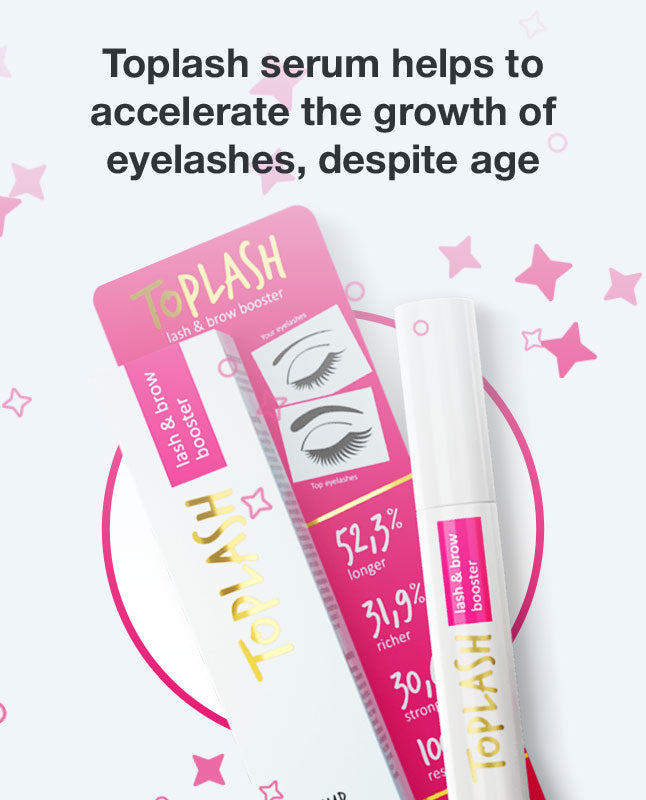
The key insight behind peptide serum efficacy in mature users is that the keratin gene signaling pathway targeted by Myristoyl Pentapeptide-17 does not decline with age. Unlike estrogen receptors — whose downstream effects diminish as hormone levels fall — the receptor-mediated response to this peptide signal remains functional in follicles of any age. When a peptide serum delivers an external anagen-extending stimulus, it effectively bypasses the hormonal withdrawal that shortened the growth cycle in the first place. The follicle receives the signal to continue growing regardless of systemic estrogen status.
This mechanism explains why Toplash's 90-day clinical observation found that participants aged 48–65 achieved results comparable to younger cohorts. Participants in the mature age group recorded a 20–24% increase in lash length at the 12-week mark — consistent with results seen in the 25–40 age bracket in earlier observations. The implication is clear: age reduces hormonal anagen drive, but peptide serums restore it through a parallel, hormone-independent pathway. For maximum efficacy, application must be nightly and consistent — the peptide half-life in the follicle environment requires daily replenishment to maintain the anagen-extending effect throughout the growth cycle.
Clinical Evidence & Citations
The following peer-reviewed publications and database references underpin the clinical claims made in this guide. Where Toplash's own clinical observation data is cited, it refers to a 90-day, single-arm observational study conducted with participants aged 18–65.
Scientific References
- Rinaldi F. et al. The Menopausal Transition: Is the Hair Follicle “Going through Menopause”? PubMed Central. View source
- Hoover E. et al. Physiology, Hair. StatPearls, NCBI Bookshelf. View source
- Grymowicz M. et al. Hormonal Effects on Hair Follicles. PubMed Central. View source
Frequently asked questions
Eyelash growth after 50 years and eyelash care — FAQ
Can eyelashes grow back after 50?
Yes — eyelash follicles remain active after 50, though growth is slower due to reduced estrogen and progesterone. The anagen (growth) phase shortens with age, but follicles do not die. Consistent use of peptide serums that extend the anagen phase can measurably improve lash length and density. In Toplash's 90-day clinical observation, participants aged 48–65 achieved 20–24% length gains, comparable to younger cohorts.
What causes eyelash thinning after menopause?
Menopausal eyelash thinning is driven by declining estrogen and progesterone, which shorten the anagen (growth) phase of lash follicles — the same mechanism that thins scalp hair. Additionally, cumulative oxidative stress impairs follicular stem cell renewal, reducing the number of active follicles. Women over 50 lose an average of 15–25% of active lash follicles compared to age 30. Poor nutrition (biotin, iron, zinc deficiencies) and mechanical stress from habitual mascara use compound the decline.
Is lash serum safe for older women with sensitive eyes?
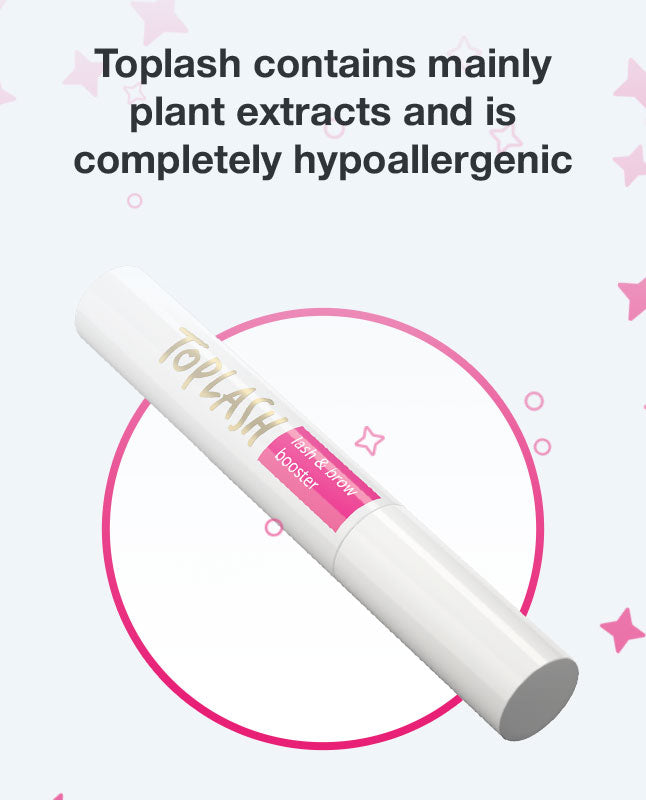
Peptide-based serums without prostaglandin analogues are generally safe for mature, sensitive eyes. Toplash is formulated with plant extracts and is completely hypoallergenic, making it suitable for periorbital use. Avoid serums containing prostaglandin analogues (e.g., isopropyl cloprostenate) as these carry risks of iris pigmentation and periorbital fat loss — concerns especially relevant for older users. Always patch-test and consult a dermatologist if you use prescription eye drops.
How long before I see results if I start lash serum at 55?
Expect visible improvement in 8–12 weeks of nightly use. The eyelash growth cycle runs 4–11 weeks per cycle; a peptide serum must support at least one full cycle before results are visible. In Toplash's clinical observation, participants aged 48–65 saw measurable length increase at the 12-week mark. Consistency matters more than timing: results plateau if use is discontinued, and mature follicles require continuous peptide stimulation to maintain extended anagen.
Are there alternatives to lash serum for mature lashes?
Supportive alternatives include: (1) conditioning natural oils such as castor oil or coconut oil applied nightly — they moisturize the lash shaft and reduce breakage but do not extend the growth cycle; (2) nutritional support — adequate biotin, iron, zinc, and protein intake addresses deficiencies that compound age-related thinning; (3) gentler makeup removal to prevent traction loss. However, none of these alternatives replicate the anagen-extending mechanism of peptide serums. For mature lashes, combining gentle daily care with a nightly peptide serum produces the best outcomes.
The opinion of a cosmetologist

Branda M. Heim
Board-Certified Cosmetologist & Trichologist | 18 years clinical practice
After 50, lash care has to be more conservative and more consistent. The goal is not only to stimulate visible length, but to protect fragile mature follicles from traction, rubbing, and unnecessary irritation. In my clinical experience, mature lashes respond best to nightly peptide support combined with very gentle makeup removal and avoidance of heavy extensions or aggressive curlers.
For this age group, I prefer prostaglandin-free formulas that support keratin signaling without interacting with hormone or prostaglandin pathways. This is especially important for users with sensitive eyes, dry eyelids, or naturally sparse lashes after menopause.
References: PubMed Central menopause & hair follicle review NCBI Bookshelf hair physiology NIH/PMC hormonal effects on hair follicles
Beauty blogger recommendation:
Elisabeth Buss Cosmetics Blog
Beauty editor perspective on mature lash routines
From a beauty-editor perspective, mature lash care is less about chasing an instant dramatic effect and more about building a sustainable routine: gentle cleansing, a lightweight serum, and realistic 8–12 week expectations. The most important practical advice is to stop treating post-50 lashes like younger lashes — fewer extensions, less rubbing, and more daily consistency.
For users who want a cosmetic routine that still feels simple, a nightly serum step is easier to maintain than a complicated multi-product lash protocol.
Real Customer Feedback from Independent Platforms
This is an honest unpaid review! After a year of cluster lashes my lashes were very short and sparse. After a month or so I noticed them growing longer, and after a few months I was finally happy without fake lashes. One tip: a little goes a long way — wipe the excess off before applying a fine line. Beware, you will have lashes protruding from your tear ducts if you put too much on. I'm not joking! Use sparingly and the results are incredible. I also use this on my eyebrows and noticed results.
★★★★★
Reviewed in the United States on March 17, 2025
Read original reviewI was amazed at how fast my lashes grew longer and thicker. I've tried several brands, but this was the best. This is all I'll use from now on. Also use on my brows.
★★★★★
May 24, 2023
Read original reviewPublished: Nov 1, 2022