
Lash Serum During Pregnancy: What's Safe, What to Avoid
Not all lash serums carry the same risk profile in pregnancy. Prostaglandin analogs require special caution — peptide-based formulas are the recommended OTC option for expecting and nursing mothers.
Updated: June 20, 2026 Written by: Branda M. Heim Reviewed by: Branda M. Heim, Board-Certified Cosmetologist9 referencesView Toplash SerumLash serums containing prostaglandin analogs — including isopropyl cloprostenate (ICP), DDDE, and prescription bimatoprost — should be avoided during pregnancy and breastfeeding due to their uterotonic mechanism. Peptide-only serums (which work via a completely different growth-factor pathway) are generally considered the safest cosmetic lash option during this period. Always confirm with your OB-GYN or dermatologist before using any lash treatment during pregnancy.
This article provides evidence-based ingredient information for educational purposes. It does not constitute medical advice. Always consult your obstetrician, dermatologist or healthcare provider before starting or continuing any topical treatment during pregnancy or breastfeeding.
Why Prostaglandin Lash Serums Are Risky in Pregnancy
Prostaglandins are endogenous lipid mediators that regulate a wide range of physiological processes including inflammation, vasodilation — and critically during pregnancy — uterine contractility, cervical ripening, and the initiation of labour.
PGF2α (prostaglandin F2 alpha) acting on uterine FP receptors is one of the primary hormonal signals that triggers and sustains uterine contractions during labour. It is the target of synthetic prostaglandin drugs used clinically to induce labour (e.g. dinoprostone, carboprost).
The Uterotonic Risk Pathway of OTC Prostaglandin Lash Serums
- PGA serum applied to lash lineIsopropyl cloprostenate (ICP) or DDDE is applied topically to the upper eyelid margin nightly.
- Systemic absorption through conjunctiva and periorbital skinThe periorbital area has relatively high skin permeability. The conjunctiva (mucous membrane) allows even greater direct systemic absorption, particularly for lipophilic compounds like prostaglandin analogs.
- FP receptor agonism — same receptor as PGF2αICP and DDDE bind to prostaglandin FP receptors systemically — the same receptors on uterine smooth muscle that mediate contractions during labour when stimulated by endogenous PGF2α.
- Potential uterotonic effect during pregnancyIn a pregnant uterus, where sensitivity to prostaglandins is heightened, exogenous FP-receptor agonism raises concerns about premature uterine contractions, particularly in the third trimester. Case reports of spontaneous abortion have been documented with prostaglandin-containing topical products.
Serums containing isopropyl cloprostenate (ICP), DDDE, MDN or bimatoprost should be discontinued during pregnancy. This includes: GrandeLASH-MD, RapidLash, LiLash, Babe Lash, NeuLash (ICP-containing) and RevitaLash Advanced (DDDE-containing). If you are using Latisse (bimatoprost), speak to your prescribing doctor about discontinuation.
In February 2026, the EU Scientific Committee on Consumer Safety confirmed in Opinion SCCS/1680/25 that ICP, DDDE and MDN "cannot be considered safe" for cosmetic use — a ruling that further underlines the precautionary principle for these ingredients, particularly in vulnerable populations like pregnant or breastfeeding individuals.
Pregnancy Lash Serum Ingredient Safety Guide
🚫 Avoid During Pregnancy
- Isopropyl Cloprostenate (ICP) — PGA; uterotonic FP-receptor agonist
- DDDE (dechloro DDDE) — PGA; same FP-receptor mechanism as ICP
- MDN — PGA prostaglandin analog; SCCS ruled unsafe
- Bimatoprost (Latisse) — Rx PGA; FDA Category C in pregnancy
- Latanoprost, travoprost — Other prostaglandin FP agonists
- Retinol / Vitamin A esters — Teratogenic at high systemic exposure
- Salicylic acid (high concentration) — NSAID pathway; prostaglandin synthesis inhibitor at high doses
✓ Generally Considered Safe
- Myristoyl Pentapeptide-17 (MP-17) — Keratin signalling; no systemic pharmacology
- Biotinoyl Tripeptide-1 (BTP-1) — KGF receptor pathway; no uterotonic mechanism
- Acetyl Tetrapeptide-3 (AT-3) — Dermal papilla support peptide; no hormonal activity
- Biotin (Vitamin B7) — Water-soluble vitamin; well-studied in pregnancy
- Panthenol (Pro-Vitamin B5) — Conditioner; broad pregnancy safety record
- Hyaluronic acid — Humectant; endogenous compound
- Arginine, castor oil, ceramides — Conditioners with no systemic hormonal activity
⚠ Use with Caution / Consult Doctor
- Phenoxyethanol — Preservative; FDA issued warning re: infants; low-level periorbital use less concerning but worth noting
- Fragrance / parfum — May contain undisclosed sensitisers; general caution in pregnancy
- Essential oils — Potency and dermal penetration vary; some have hormonal effects (e.g. lavender, tea tree)
- Panax ginseng extract — Estrogenic activity reported; avoid or confirm with doctor
- Caffeine — Minimal topical systemic absorption; generally low risk but some prefer avoidance
Using Lash Serums: Trimester-by-Trimester Guide
First Trimester (Weeks 1–12) — Most Caution Required
Organogenesis (organ formation) is most active in the first trimester, making it the highest-risk window for any ingredient with systemic activity. Stop all PGA-containing serums immediately upon learning of pregnancy. If switching to a peptide serum, start only after confirming with your OB-GYN. Many doctors recommend avoiding non-essential cosmetics entirely in the first trimester as a precaution.
Second Trimester (Weeks 13–27) — Conditional Use of Peptide Serums
Organogenesis is largely complete. Risk from topical cosmetics is generally considered lower than in the first trimester, though the uterus continues to grow and prostaglandin sensitivity increases. Peptide-based serums without prostaglandin analogs are more appropriate in this window if your healthcare provider approves. Continue avoiding all PGA ingredients.
Third Trimester (Weeks 28–40) — Increased Prostaglandin Sensitivity
The uterus becomes progressively more sensitive to prostaglandins as the due date approaches. This is the highest-risk period for PGA-containing serums — the body is priming for prostaglandin-mediated labour initiation. Prostaglandin lash serums are absolutely contraindicated. Peptide serums remain appropriate if approved by your doctor.
Breastfeeding — Similar Precautions Apply
Systemic absorption of topical PGAs during breastfeeding creates a theoretic risk of transfer to breast milk, which could affect the breastfed infant. Additionally, prostaglandins play a role in lactation maintenance; exogenous FP-receptor agonism may interfere with this. Continue avoiding PGA serums until weaning. Peptide serums can typically be used if cleared by your healthcare provider.
How Pregnancy Changes Your Lashes Naturally
📈 During Pregnancy: Lashes Often Improve Naturally
Elevated oestrogen levels during pregnancy extend the anagen (active growth) phase of the hair growth cycle. Many pregnant women notice their lashes appearing thicker, longer and fuller — particularly in the second and third trimesters. This is a physiological effect of hormonal change, not a product effect.
This natural improvement means many pregnant women may not need a lash serum at all during pregnancy, removing any ingredient-safety concern during this window.
Postpartum Lash Shedding — What to Expect
After delivery, oestrogen levels drop sharply. The large cohort of lashes held in the extended anagen phase by pregnancy oestrogen simultaneously enters telogen (resting phase), followed by a mass shed. This is called postpartum telogen effluvium.
Postpartum lash (and hair) shedding typically begins at 3–6 months after delivery and resolves within 6–12 months as the cycle normalises. It can be alarming but is a normal physiological process.
| Postpartum Period | Lash / Hair Status | Lash Serum Guidance |
|---|---|---|
| Weeks 1–8 postpartum | Still fuller from pregnancy; gradual transition beginning | Continue avoiding PGA serums if breastfeeding; peptide serum optional with doctor clearance |
| Months 2–4 postpartum | Shedding begins as telogen cohort reaches catagen | Starting a peptide serum now can support the incoming anagen phase. Still avoid PGAs if breastfeeding. |
| Months 4–7 postpartum | Peak shedding period — most noticeable lash and hair loss | Peptide serum at full dose (nightly). This phase is temporary and resolves naturally. |
| Months 7–12 postpartum | New growth cohort entering anagen; gradual density restoration | Continue peptide serum. Transition to maintenance schedule (3–4 nights/week) once density stabilises. |
| 12+ months postpartum | Lash cycle fully normalised in most women | Maintenance peptide serum use; full safety profile of chosen serum now relevant again. |
How to Check Your Lash Serum for Pregnancy Safety
INCI (International Nomenclature of Cosmetic Ingredients) names for ingredients to search in your current serum's label:
| INCI Name | Common Brand Names | Pregnancy Risk | Verdict |
|---|---|---|---|
| Isopropyl Cloprostenate | GrandeLASH-MD, RapidLash, LiLash, Babe Lash, NeuLash | Uterotonic FP agonist | AVOID |
| Dechloro Dihydroxy Difluoro Ethylcloprostenoate (DDDE) | RevitaLash Advanced | Uterotonic FP agonist | AVOID |
| Methyl Amido Dihydro Noralfaprostal (MDN) | Various European OTC serums | Uterotonic FP agonist; SCCS UNSAFE | AVOID |
| Bimatoprost | Latisse (Rx) | FDA Category C; potent FP agonist | AVOID (consult Rx Dr) |
| Myristoyl Pentapeptide-17 | Toplash | None identified — keratin signalling only | GENERALLY SAFE |
| Biotinoyl Tripeptide-1 | Toplash | None identified — KGF pathway | GENERALLY SAFE |
| Acetyl Tetrapeptide-3 | Toplash | None identified — dermal papilla support | GENERALLY SAFE |
| Retinol / Retinyl Palmitate | Various anti-ageing serums | Teratogenic at sufficient systemic dose | AVOID |
| Phenoxyethanol | Widespread preservative | FDA advisory re: infants; limited periorbital data | CAUTION |
| Panthenol, biotin, hyaluronic acid | Many serums including Toplash | Well-studied in pregnancy; no concerns identified | SAFE |
"In my formulation work, the precautionary standard for periorbital products in pregnancy is higher than for most cosmetics — the conjunctival route allows meaningful systemic absorption of lipophilic molecules. Removing prostaglandin analogs from the formula entirely, as Toplash does, isn't just about EU compliance — it's the right position for any product used near mucous membranes by people who may be pregnant."
Practical Recommendations
If You Are Currently Pregnant
- Stop all lash serums containing ICP, DDDE, MDN or bimatoprost immediately
- If using Latisse, contact your prescribing doctor before stopping (do not stop a prescription treatment without medical advice)
- If you wish to use a lash serum, discuss a peptide-only formula with your OB-GYN
- Remember that pregnancy oestrogen often naturally improves lash density — you may not need a serum at all
- Avoid essential oil-based lash "growth" treatments as a substitute — safety data is limited
If You Are Breastfeeding
- Continue avoiding PGA-containing serums until weaning is complete
- Peptide serums are generally considered lower risk but confirm with your healthcare provider
- Start monitoring for postpartum telogen effluvium from month 3 — beginning a peptide serum during the early shedding phase (months 2–4) can support the regrowth phase
Questions to Ask Your Healthcare Provider
- "Is it safe for me to use a peptide-only lash serum during pregnancy / while breastfeeding?"
- "Should I discontinue my Latisse prescription given my pregnancy?"
- "Is any topical periorbital product appropriate for me right now?"
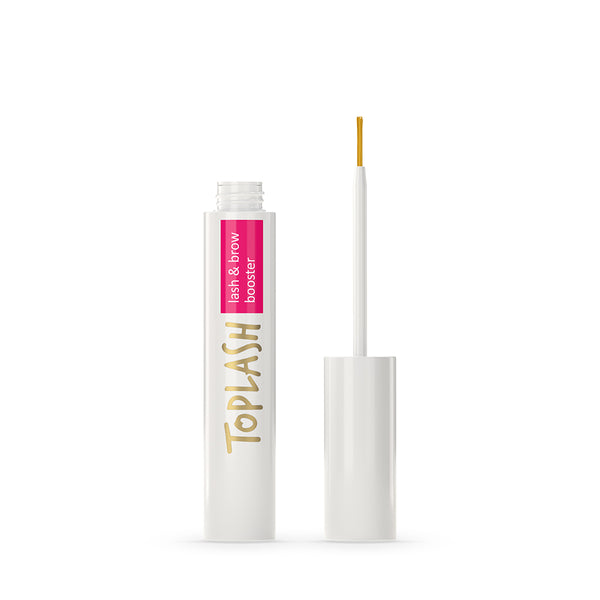
Recommended alternative — complete triple-peptide system
Toplash Lash & Brow Serum
The complete AT-3 + BTP-1 + MP-17 growth-peptide system with independent clinical data: +52.3% length and +31.9% volume at 8 weeks. Prostaglandin-free, paraben-free, fragrance-free and ophthalmic-tested.
Shop Toplash SerumFrequently Asked Questions
Can I use lash serum while pregnant?
It depends on the ingredients. Lash serums containing prostaglandin analogs (isopropyl cloprostenate, DDDE, bimatoprost) should be avoided during pregnancy due to their uterotonic effects — they bind the same FP receptors as PGF2α, which mediates uterine contractions during labour. Peptide-only lash serums are generally considered the safest cosmetic option, but always consult your OB-GYN before using any lash treatment during pregnancy.
Why are prostaglandin lash serums unsafe during pregnancy?
Prostaglandins are the hormones that drive uterine contractions during labour. OTC lash serum ingredients like isopropyl cloprostenate (ICP) and DDDE are prostaglandin FP receptor agonists — they mimic PGF2α, the primary uterine contraction signal. Topical application near the conjunctiva allows meaningful systemic absorption. In a pregnant uterus, particularly in the third trimester, exogenous FP-receptor stimulation raises documented concerns about premature contractions. Case reports of spontaneous abortion with prostaglandin-containing topical products have been documented.
Is Latisse (bimatoprost) safe to use during pregnancy?
Latisse is classified FDA Pregnancy Category C — meaning animal reproduction studies have shown adverse effects and no adequate human studies exist. Most dermatologists and ophthalmologists recommend discontinuing Latisse during pregnancy as a precautionary measure. If you are prescribed Latisse, speak to your prescribing doctor before stopping; they can advise on whether your underlying hypotrichosis warrants continued treatment or an alternative approach.
Are peptide lash serums safe during pregnancy?
Peptide lash serums like Toplash contain no prostaglandin analogs and work through a different pathway — KGF receptor signalling and keratin gene expression — with no uterotonic mechanism. They are generally considered the safest cosmetic lash growth option during pregnancy. However, no cosmetic product has been clinically studied specifically in pregnant populations. Always confirm with your healthcare provider before use.
Will my lashes change during pregnancy anyway?
Yes. Elevated oestrogen during pregnancy prolongs the anagen (active growth) phase of the lash cycle, and many pregnant women notice thicker, fuller lashes — particularly from the second trimester onward. After delivery, oestrogen drops sharply, triggering postpartum telogen effluvium (mass shedding) typically at 3–6 months postpartum. This is temporary and resolves within 6–12 months.
Can I use lash serum while breastfeeding?
The same cautions apply during breastfeeding. Prostaglandin-containing serums are not recommended — systemic absorption creates a theoretical risk of transfer to breast milk and potential uterotonic effects that could interfere with lactation. Peptide serums are considered lower risk, but limited specific data exists. Consult your healthcare provider for guidance tailored to your situation.
When can I restart a lash serum after giving birth?
If breastfeeding, continue avoiding prostaglandin-containing serums until weaning. Peptide serums can typically be restarted as soon as cleared by your healthcare provider — often from months 2–4 postpartum, which aligns with the early stages of postpartum lash shedding. Starting a peptide serum at this point can help support the incoming anagen (regrowth) phase during the shedding period.