
Toplash vs RapidLash:Which Lash Serum Is Better?
Choose Toplash if you want independently verified results without prostaglandin risk. Toplash's triple-peptide formula delivered +52.3% lash length and +31.9% volume in 8-week independent clinical testing — with zero prostaglandin analogues. RapidLash costs less per mL (~$9/mL vs. $16.63/mL) but its key active, isopropyl cloprostenate (ICP), was ruled "cannot be considered safe" for cosmetic use by the EU SCCS on February 2, 2026. The FDA also issued a warning letter to RapidLash's manufacturer over ICP use. For long-term lash health, Toplash is the better, safer investment.
Updated: June 20, 2026 Written by: Branda M. Heim Reviewed by: Branda M. Heim, Board-Certified CosmetologistView Toplash SerumChoose Toplash if you want independently verified results without prostaglandin risk. Toplash's triple-peptide formula delivered +52.3% lash length and +31.9% volume in 8-week independent clinical testing — with zero prostaglandin analogues. RapidLash costs less per mL (~$9/mL vs. $16.63/mL) but its key active, isopropyl cloprostenate (ICP), was ruled "cannot be considered safe" for cosmetic use by the EU SCCS on February 2, 2026. The FDA also issued a warning letter to RapidLash's manufacturer over ICP use. For long-term lash health, Toplash is the better, safer investment.
At a Glance
- Prostaglandin-free: ✓ Yes
- Key actives: MP-17, BTP-1, AT-3
- Clinical result: +52.3% length
- Result timeline: 8 weeks (independent)
- EU SCCS safe: ✓ Compliant
- Price / mL: $16.63/mL
- Prostaglandin-free: ✗ Contains ICP
- Key actives: ICP + HEXATEIN® complex
- Brand claim: 88% consumer perception
- Result timeline: 8 wks (brand study)
- EU SCCS safe: ✗ ICP ruled unsafe
- Price / mL: ~$9/mL
Head-to-Head Comparison
A full side-by-side breakdown of every major factor — from formula safety to application experience.
| Factor | Toplash | RapidLash |
|---|---|---|
| Prostaglandin analogues | ✓ None | ✗ ICP present |
| EU SCCS (Feb 2026) compliant | ✓ Fully compliant | ✗ ICP not safe |
| FDA regulatory status | ✓ Cosmetic — no issues | ✗ Warning letter issued |
| Primary active mechanism | Triple peptide (MP-17, BTP-1, AT-3) | Prostaglandin analogue (ICP) |
| Clinical evidence type | ✓ Independent clinical trial | Brand consumer study only |
| Lash length improvement | +52.3% at 8 weeks | 88% perception (no measurement) |
| Volume / fullness | +31.9% at 8 weeks | 86% perception (no measurement) |
| Applicator type | Fine-tip precision brush | Eyeliner-style brush |
| Volume | 3 mL | 3 mL |
| Price per mL | $16.63/mL | ~$9/mL (safety concerns) |
| Iris color change risk | ✓ None | ✗ ICP risk |
| Periorbital fat loss risk | ✓ None | ✗ ICP risk |
| Rebound shedding on stop | ✓ No rebound | ⚠ Possible rebound (PGA) |
| Safe for contact lens wearers | ✓ Yes | ⚠ ICP ocular risks |
Ingredients Breakdown
Understanding what's in each bottle is key to making a safe, informed choice. Here's how the two formulas compare at the active-ingredient level.
- MP-17 (Myristoyl Pentapeptide-17) — stimulates keratin gene expression; clinically shown to upregulate keratin up to 160%.
- BTP-1 (Biotinoyl Tripeptide-1) — anchors follicles to the dermal papilla; +17% length and +19% thickness in 30-day testing.
- AT-3 (Acetyl Tetrapeptide-3) — extends the anagen (growth) phase and reduces follicle miniaturisation.
- Panthenol (B5) — coats lash fibres, reducing brittleness and breakage.
- Hyaluronic acid — maintains follicle zone hydration for optimal growth conditions.
- No prostaglandins, no hormones, no parabens — fully cosmetic-grade.
- Isopropyl Cloprostenate (ICP) ⚠ EU SCCS: Not Safe — prostaglandin analogue; the EU SCCS ruled it "cannot be considered safe" for cosmetic use (Feb 2026).
- Octapeptide-2 / Copper Tripeptide-1 — HEXATEIN® conditioning peptides; supportive but not backed by independent lash-specific clinical data.
- Biotin (Pro-Vitamin B7) — maintains lash appearance but limited topical absorption evidence.
- Panthenol (Vitamin B5) — moisturises and coats lash fibres.
- Pumpkin seed extract — antioxidant; may inhibit 5-alpha-reductase but weak topical evidence.
- Soybean oil — emollient; conditions lash fibres.
Safety Profile: What the Science Says
The safety of a lash serum depends heavily on whether it contains a prostaglandin analogue. Here's what regulators have said about RapidLash's key active, ICP.
The EU Scientific Committee on Consumer Safety issued its final opinion on isopropyl cloprostenate (ICP) — the prostaglandin analogue in RapidLash — stating: "ICP cannot be considered safe for use in cosmetic products intended for application in the vicinity of the eye, at a concentration of 0.005%." This ruling applies to all cosmetic lash and brow serums containing ICP, regardless of concentration.
Clinical Data: What the Numbers Actually Mean
Not all "clinical results" are equal. The type, independence, and methodology of a study dramatically changes how much you can trust the claim.
- Lash length increase: +52.3%
- Lash volume increase: +31.9%
- Lash strength increase: +30.6%
- Users seeing results by day 21: 98%
- Test duration: 8 weeks
- Lash improvement (perception): 88%
- Fuller looking lashes (perception): 86%
- Thicker/stronger (perception): 86%
- Independently verified?: No
- Test duration: 8 weeks
Key distinction: Toplash's numbers are measured (caliper/digital imaging of lash length and volume). RapidLash's figures are consumer-reported perception — a category that routinely shows high satisfaction even for placebo products. Independent verification is the gold standard.
Pricing & Value
Both products come in 3 mL bottles, but the pricing and what you're paying for differ significantly.
True cost perspective: RapidLash is approximately 46% cheaper per mL on the surface. However, the lower price does not account for the potential cost of side-effect management — including dermatology visits for hyperpigmentation or orbital hollowing — nor the loss of lash progress if you experience PGA rebound upon discontinuation. Safety has a measurable financial value.
Final Verdict
Safer Formula. Better Evidence. Proven Results.
RapidLash is cheaper, but the savings come at the cost of safety and independent clinical credibility. It contains isopropyl cloprostenate — the same prostaglandin analogue that the EU SCCS ruled unsafe in February 2026. The FDA has also flagged the manufacturer for regulatory violations. Toplash is more expensive per mL, but delivers independently verified +52.3% lash length growth in 8 weeks with a prostaglandin-free triple-peptide formula that carries none of ICP's ocular, pigmentary, or fat-loss risks.
Try Toplash — $49.90 for 3 mL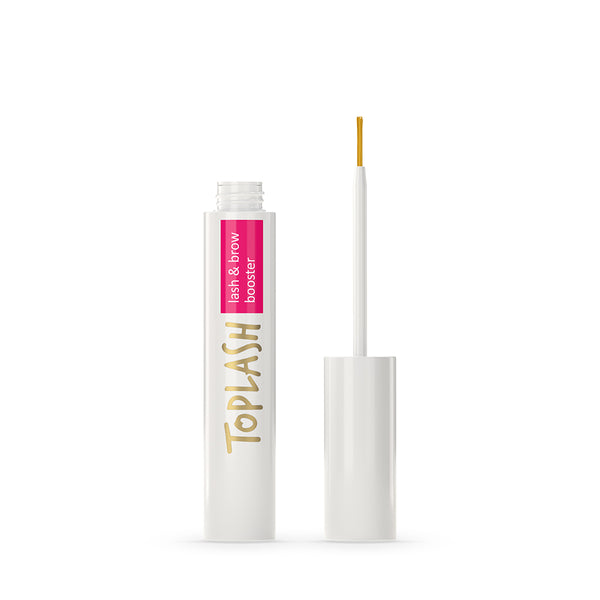
Toplash Lash & Brow Serum
MP-17 + BTP-1 + AT-3 with independent clinical data: +52.3% length and +31.9% volume at 8 weeks. Prostaglandin-free, paraben-free, ophthalmic-tested and extension-safe.
Shop Toplash SerumFrequently Asked Questions
Is RapidLash safe to use?
RapidLash contains isopropyl cloprostenate (ICP), a synthetic prostaglandin analogue. The EU Scientific Committee on Consumer Safety (SCCS) issued a final opinion on February 2, 2026 (SCCS/1680/25) stating that ICP "cannot be considered safe" for cosmetic use even at concentrations up to 0.005%. The FDA also issued a warning letter to RapidLash's manufacturer, Lifetech Resources LLC. Known risks include iris color change, periorbital fat loss, skin hyperpigmentation, and rebound shedding upon discontinuation. Toplash contains no prostaglandins and carries none of these risks.
Does RapidLash contain prostaglandins?
Yes. RapidLash Eyelash Enhancing Serum contains isopropyl cloprostenate (ICP) — a synthetic prostaglandin analogue — listed in its ingredient deck. ICP is the product's primary growth-driving active. The EU SCCS ruled in February 2026 that ICP "cannot be considered safe" for cosmetic application in the vicinity of the eye. Toplash is fully prostaglandin-free; its active system uses only peptides (MP-17, BTP-1, AT-3).
Which shows faster results — Toplash or RapidLash?
RapidLash may produce early visible changes because ICP acts via the prostaglandin pathway, which can artificially extend the lash's anagen phase quickly. However, RapidLash results are based solely on brand-commissioned consumer perception studies — no independent measurement. Toplash shows 98% of users noticing a visible difference by day 21, with independently verified +52.3% length and +31.9% volume by week 8. The quality of evidence for Toplash's timeline is significantly stronger.
What is the RapidLash FDA warning letter about?
The FDA issued a warning letter to Lifetech Resources LLC — RapidLash's manufacturer — for violations of the Federal Food, Drug and Cosmetic Act. The FDA classified RapidLash as a drug rather than a cosmetic product based on its eyelash growth claims and the use of isopropyl cloprostenate, which the FDA treats as a drug ingredient. The letter cited potential adverse effects including ocular irritation, hyperemia, iris color change, macular edema, and ocular inflammation.
Which is better value — Toplash or RapidLash?
RapidLash is cheaper at roughly $9/mL versus Toplash's $16.63/mL. However, RapidLash's lower sticker price does not factor in the regulatory red flags, safety risks, or the reliance on consumer perception (not independent measurement) for its efficacy claims. Toplash delivers independently verified clinical results with a clean safety profile. When evidence quality and safety are considered, Toplash offers stronger long-term value — the cost difference is the premium you pay for proof and peace of mind.
Can I use Toplash after stopping RapidLash?
Yes. You can switch from RapidLash to Toplash directly. When discontinuing any prostaglandin analogue, a brief adjustment period is possible as the lash cycle resets from its artificially extended state. Continue applying Toplash daily throughout this transition — its peptide complex supports follicle health as the PGA effect tapers. Allow 12 weeks from the switch for Toplash's full results to establish. Most users see early improvement by week 3.
Is Toplash or RapidLash better for sensitive eyes?
Toplash is significantly better for sensitive eyes. Its water-based peptide formula is ophthalmologist-tested and well-tolerated with minimal reported irritation. RapidLash contains a prostaglandin analogue that can cause stinging, redness, lid irritation, and ocular inflammation in sensitive users. Toplash is also safe for contact lens wearers and carries no risk of iris color change or periorbital fat loss.