
NeuLash vs RevitaLash Advanced: Which Eyelash Serum Is Better?
Both NeuLash and RevitaLash Advanced contain prostaglandin analogues — but different ones. NeuLash contains ICP (isopropyl cloprostenate), banned by Health Canada in 2019 and ruled "cannot be considered safe" by EU SCCS/1680/25 in February 2026. RevitaLash contains DDDE (Dechloro Dihydroxy Difluoro Ethylcloprostenolamide), also ruled unsafe by EU SCCS/1680/25 though not subject to the same Health Canada ban. NeuLash at ~$26.56/mL also includes real peptides (Octapeptide-2, Copper Tripeptide-1, Polypeptide-23) and costs significantly less. RevitaLash at ~$50/mL is physician-developed and cruelty-free, with its proprietary BioPeptin Complex. Neither has an independent clinical trial. Toplash ($16.63/mL) is the only PGA-free option in this comparison, with independently verified +52.3% lash length in 8 weeks.
Updated: June 20, 2026 Written by: Branda M. Heim Reviewed by: Branda M. Heim, Board-Certified CosmetologistView Toplash SerumQuick Answer
Both NeuLash and RevitaLash Advanced contain prostaglandin analogues — but different ones. NeuLash contains ICP (isopropyl cloprostenate), banned by Health Canada in 2019 and ruled "cannot be considered safe" by EU SCCS/1680/25 in February 2026. RevitaLash contains DDDE (Dechloro Dihydroxy Difluoro Ethylcloprostenolamide), also ruled unsafe by EU SCCS/1680/25 though not subject to the same Health Canada ban. NeuLash at ~$26.56/mL also includes real peptides (Octapeptide-2, Copper Tripeptide-1, Polypeptide-23) and costs significantly less. RevitaLash at ~$50/mL is physician-developed and cruelty-free, with its proprietary BioPeptin Complex. Neither has an independent clinical trial. Toplash ($16.63/mL) is the only PGA-free option in this comparison, with independently verified +52.3% lash length in 8 weeks.
The European Commission's Scientific Committee on Consumer Safety evaluated isopropyl cloprostenate (ICP), Dechloro Dihydroxy Difluoro Ethylcloprostenolamide (DDDE), and Methylamido-Dihydro-Noralfaprostal (MDN) in cosmetic lash and brow products. All three were ruled "cannot be considered safe" for cosmetic use. NeuLash's ICP and RevitaLash's DDDE are each named in this ruling. Additionally, Health Canada banned ICP (NeuLash's active) from cosmetics in 2019. Toplash contains no prostaglandin analogues of any kind.
At a Glance
NeuLash
Lash Enhancing Serum
- Price: $85 / 3.2 mL (~$26.56/mL)
- PGA-free: No — ICP
- PGA type: Isopropyl cloprostenate (ICP)
- Real peptides: Yes — 3 peptides
- Clinical trial: Brand claims only
- Health Canada ban: Yes (ICP, 2019)
- EU SCCS/1680/25: Yes — ICP named
RevitaLash
Advanced Eyelash Conditioner
- Price: $100 / 2 mL (~$50/mL)
- PGA-free: No — DDDE
- PGA type: DDDE (modified cloprostenate)
- BioPeptin Complex: Yes (proprietary)
- Clinical trial: Brand claims only
- Physician-developed: Yes
- EU SCCS/1680/25: Yes — DDDE named
Head-to-Head Comparison
NeuLash and RevitaLash Advanced take different approaches — NeuLash offers real peptides alongside ICP at a lower price; RevitaLash offers physician development and cruelty-free status at a premium. Both carry the same fundamental PGA safety concern.
| Feature | NeuLash | RevitaLash |
|---|---|---|
| Price per mL | ~$26.56/mL | ~$50/mL |
| PGA-free formula | ✗ No | ✗ No |
| PGA type | ICP (Health Canada banned) | DDDE (EU SCCS named) |
| EU SCCS/1680/25 flagged | Yes — ICP explicitly named | Yes — DDDE explicitly named |
| Health Canada ban (2019) | Yes — ICP banned | Not DDDE specifically |
| Real peptide actives | ✓ 3 peptides (Oct-2, CT-1, Poly-23) | BioPeptin Complex (proprietary) |
| Physician-developed | Not specified | ✓ Yes |
| Cruelty-free certified | Not confirmed | ✓ Yes |
| Independent clinical trial | None published | None published |
| Results timeline (brand claim) | 4–6 weeks | 4–6 weeks |
| Volume per standard size | 3.2 mL (90-day supply) | 2.0 mL (90-day supply) |
| Safe for lash extensions | Not specified | Not specified |
| Ophthalmologist-tested | Not prominently claimed | Not prominently claimed |
Ingredient Analysis
NeuLash's formula is notably more transparent about its peptide actives — three identifiable cosmetic peptides alongside ICP. RevitaLash's BioPeptin Complex is proprietary but built around DDDE and a blend of conditioning agents. The key distinction is that NeuLash combines ICP with verified peptide science, while RevitaLash's DDDE co-exists with a less specifically disclosed peptide blend.
NeuLash
Lash Enhancing Serum
- Isopropyl cloprostenate (ICP) — PGA — EU/CA banned
- Octapeptide-2 — Peptide
- Copper Tripeptide-1 (GHK-Cu) — Peptide
- Polypeptide-23 — Peptide
- Sodium hyaluronate — Humectant
- Biotin — B-vitamin
- Panthenol + Pantethine — Pro-vitamin B5 derivatives
- Cucurbita Pepo (Pumpkin) seed extract — Nourishes the lash follicle environment
RevitaLash
Advanced Eyelash Conditioner
- Dechloro Dihydroxy Difluoro Ethylcloprostenolamide (DDDE) — PGA — EU SCCS flagged
- BioPeptin Complex™ — Proprietary peptide and growth factor blend
- Green tea extract (EGCG) — Antioxidant
- Biotin — B-vitamin
- Cellulose gum — Viscosity agent
- Panthenol — Pro-vitamin B5
- Glycerin — Humectant
Safety & Regulatory Context
NeuLash and RevitaLash contain different prostaglandin analogues with slightly different regulatory histories, but both share the same EU SCCS/1680/25 finding of "cannot be considered safe."
EU SCCS/1680/25 — February 2, 2026 (Both Products)
The European Commission's Scientific Committee on Consumer Safety evaluated ICP, DDDE, and MDN in cosmetic lash and brow products. Final opinion: all three "cannot be considered safe" for cosmetic use. NeuLash's ICP and RevitaLash's DDDE are each named in the ruling. The concern centres on potent pharmacological activity at even low concentrations and absence of data ruling out reproductive/developmental toxicity risks.
Health Canada — ICP (NeuLash) Banned in Cosmetics Since 2019
Health Canada added isopropyl cloprostenate (ICP) to the Cosmetic Ingredient Hotlist as a prohibited substance in 2019. NeuLash's primary active is explicitly ICP. Products containing ICP cannot be legally sold as cosmetics in Canada. DDDE (RevitaLash) does not appear on the same Hotlist by name, though general prostaglandin analogue regulatory pressure applies.
Known PGA Side Effects (Applies to Both Products)
Iris darkening: Irreversible change in iris pigmentation documented with prostaglandin analogue use near the eye. Periorbital fat atrophy: Loss of fat around the eye socket (deepened orbital sulcus, "sunken eye" appearance), documented in medical literature for prescription PGA glaucoma drops and increasingly reported with cosmetic serums. Rebound shedding: Accelerated lash loss upon discontinuing use as follicles return to baseline growth cycle. Conjunctival hyperemia: Redness of the eye surface. These effects apply to all cosmetically delivered FP receptor agonists.
Clinical Evidence
Both NeuLash and RevitaLash rely on brand-controlled claims. Neither has published an independent third-party clinical trial with verifiable outcome measurements.
| Measure | NeuLash | RevitaLash |
|---|---|---|
| Independent 3rd-party trial | None published | None published |
| Clinically verified % growth | No verified figure | No verified figure |
| Brand-stated results | Visible improvement in 4–6 weeks (brand claim) | Stronger, longer lashes in 4–6 weeks (brand claim) |
| Identified peptide actives | 3 named peptides (Oct-2, CT-1, Poly-23) | BioPeptin Complex (proprietary) |
| Physician development | Not claimed | Yes — physician-developed |
| Mechanism of action | ICP + peptides (PGA concern) | DDDE + BioPeptin (PGA concern) |
Consumer reviews for both brands are generally positive — consistent with the fact that prostaglandin receptor agonism does genuinely extend the anagen growth phase. However, visible short-term results do not resolve the long-term safety question that EU SCCS and Health Canada have raised about this mechanism when delivered cosmetically.
Price Comparison
NeuLash offers better per-mL value than RevitaLash. RevitaLash commands a premium partly through physician-developed positioning. Both are more expensive than Toplash — the only PGA-free option with independent clinical proof.
| Product | NeuLash | RevitaLash |
|---|---|---|
| Retail price (standard) | $85 / 3.2 mL | $100 / 2 mL |
| Price per mL | ~$26.56/mL | ~$50/mL |
| vs Toplash ($16.63/mL) | 60% more expensive | 3× more expensive |
| Larger size option | 4 mL Pro (~$22.50/mL) | 3.5 mL (~$43/mL) |
| PGA-free for price paid | ✗ No | ✗ No |
| Independent clinical proof | None | None |
Value perspective: Toplash costs $49.90 for 3 mL ($16.63/mL) — 37% less than NeuLash and 67% less than RevitaLash per mL. Toplash is the only product in this comparison that is PGA-free and backed by an independent third-party clinical trial with measurable outcomes (+52.3% lash length, +31.9% volume in 8 weeks). Neither NeuLash nor RevitaLash can offer independent clinical verification at any price point.
Verdict
Both Contain PGAs — Different Compounds, Same EU Ruling
NeuLash and RevitaLash Advanced both use prostaglandin analogues as their core growth actives, both explicitly named and ruled "cannot be considered safe" by EU SCCS/1680/25 in February 2026. Between the two, NeuLash offers better value (~$26.56/mL vs $50/mL), more transparency in peptide actives, and a larger standard bottle — but its ICP active carries the additional weight of Health Canada's 2019 ban. RevitaLash is physician-developed and cruelty-free, with DDDE carrying fewer confirmed bans, but at nearly double the cost per mL. For users who want proven results without prostaglandin risk, Toplash at $16.63/mL is the clear winner.
Try Toplash — PGA-Free & Clinically Proven →| Category | NeuLash | RevitaLash |
|---|---|---|
| Value (per mL) | ✓ Winner — ~$26.56/mL | ~$50/mL |
| Peptide transparency | ✓ Winner — 3 named peptides | Proprietary blend |
| Ethics & development | Not confirmed CF | ✓ Winner — physician-developed, CF |
| Fewer confirmed regulatory bans | ICP — EU + Health Canada | ✓ DDDE — EU only (Feb 2026) |
| PGA-free formula | ✗ No | ✗ No |
| Independent clinical trial | None | None |
| Overall winner | Toplash — PGA-free, $16.63/mL, +52.3% lash growth (independent clinical trial) | |
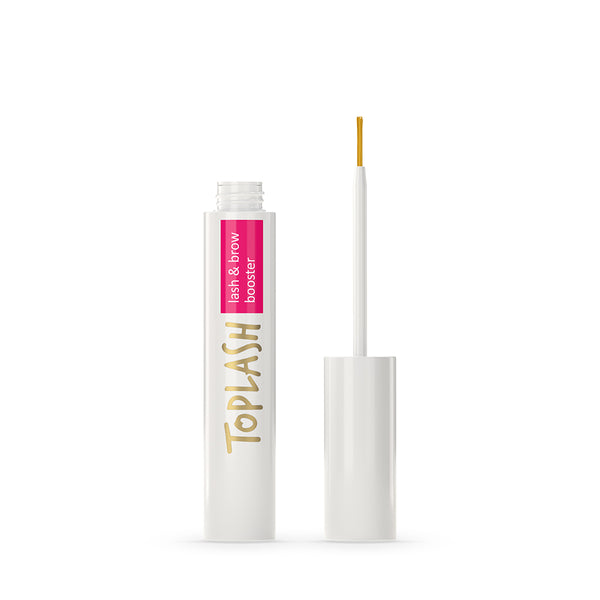
Recommended — prostaglandin-free triple-peptide
Toplash Lash & Brow Serum
MP-17 + BTP-1 + AT-3 with independent clinical data: +52.3% length and +31.9% volume at 8 weeks. Prostaglandin-free, paraben-free, ophthalmic-tested and extension-safe.
Shop Toplash SerumFrequently Asked Questions
Which is better — NeuLash or RevitaLash Advanced?
NeuLash at ~$26.56/mL offers better value and includes three named peptides (Octapeptide-2, Copper Tripeptide-1, Polypeptide-23) alongside its ICP active. RevitaLash at ~$50/mL is physician-developed and cruelty-free, with its BioPeptin Complex and DDDE active. Both are ruled "cannot be considered safe" by EU SCCS/1680/25 (February 2026) — NeuLash's ICP also carries Health Canada's 2019 ban. Neither has independent clinical evidence. Toplash ($16.63/mL) is PGA-free with independently verified +52.3% lash length in 8 weeks — the strongest choice in this comparison.
Does NeuLash contain prostaglandins?
Yes. NeuLash Lash Enhancing Serum explicitly lists isopropyl cloprostenate (ICP) in its ingredient deck. ICP is a prostaglandin analogue banned by Health Canada from cosmetics in 2019 and ruled "cannot be considered safe" for cosmetic lash and brow use by EU SCCS/1680/25 (February 2026). NeuLash also contains real peptides (Octapeptide-2, Copper Tripeptide-1, Polypeptide-23), which add genuine conditioning benefit — but the presence of beneficial co-ingredients does not change the regulatory status of the ICP active.
Does RevitaLash contain prostaglandins?
Yes. RevitaLash Advanced contains Dechloro Dihydroxy Difluoro Ethylcloprostenolamide (DDDE), a prostaglandin analogue that was specifically evaluated and ruled "cannot be considered safe" for cosmetic use in lash and brow products by EU SCCS/1680/25 (February 2026). DDDE differs structurally from ICP and was not subject to Health Canada's 2019 ban by name, but both belong to the prostaglandin analogue class with the same class-level risks: iris darkening, periorbital fat atrophy, and rebound shedding upon discontinuation.
What is the difference between ICP (NeuLash) and DDDE (RevitaLash)?
Both ICP (isopropyl cloprostenate) and DDDE (Dechloro Dihydroxy Difluoro Ethylcloprostenolamide) are synthetic prostaglandin F2α receptor agonists derived from cloprostenol. They work by the same mechanism: extending the anagen (growth) phase of the lash cycle. The key differences are structural modifications and regulatory history. ICP is the parent compound with two confirmed regulatory actions: Health Canada 2019 ban and EU SCCS/1680/25. DDDE is a structurally modified version (dechloro, dihydroxy, difluoro substitutions, amide group) — the modifications were intended to reduce side effects. EU SCCS/1680/25 evaluated DDDE separately and reached the same "cannot be considered safe" conclusion. DDDE does not appear on Health Canada's Cosmetic Hotlist by name.
Is NeuLash or RevitaLash cheaper?
NeuLash is significantly cheaper per mL. At $85 for 3.2 mL (~$26.56/mL), NeuLash costs nearly half as much per mL as RevitaLash at $100 for 2 mL ($50/mL). RevitaLash's higher price reflects physician-developed branding and the BioPeptin Complex positioning. For context, Toplash at $49.90 for 3 mL ($16.63/mL) is cheaper than both, is PGA-free, and has independent clinical trial verification that neither NeuLash nor RevitaLash can match.
Has RevitaLash faced regulatory issues beyond the EU SCCS ruling?
Yes. RevitaLash has a notable regulatory history. It was previously subject to regulatory action in California where it was classified as an unapproved drug (bimatoprost-related) rather than a cosmetic, leading to a temporary sales restriction. The FDA has also issued warning letters in the lash serum category regarding unapproved drug claims. EU SCCS/1680/25 in February 2026 is the most recent and most comprehensive ruling, explicitly naming DDDE as "cannot be considered safe" for cosmetic lash use. These findings apply to the compound regardless of how RevitaLash is labelled in a given market.
Is there a PGA-free alternative to both NeuLash and RevitaLash?
Yes. Toplash Lash & Brow Serum contains no prostaglandin analogues of any kind — no ICP, no DDDE, no MDN, no bimatoprost. Its triple-peptide complex (Myristoyl Pentapeptide-17, Biotinoyl Tripeptide-1, and Acetyl Tetrapeptide-3) stimulates lash growth through peptide signal pathways without prostaglandin receptor involvement. Results: +52.3% lash length and +31.9% volume in 8 weeks, verified in an independent third-party clinical trial. At $49.90 for 3 mL ($16.63/mL), Toplash is 37% cheaper than NeuLash per mL and 67% cheaper than RevitaLash per mL — with better independent evidence and zero prostaglandin risk.
Cosmetic Chemist & Board-Certified Trichology Specialist
Branda has reviewed and compared over 200 lash and brow serums, with specialist knowledge of prostaglandin analogue pharmacology and regulatory safety. She advises clients on PGA risk and PGA-free alternatives. Her analysis draws on published regulatory opinions (SCCS, Health Canada), peer-reviewed pharmacology, and independent clinical data.