
LiLash vs GrandeLASH-MD: Which Eyelash Serum Is Better?
Both LiLash and GrandeLASH-MD contain prostaglandin analogues in the ICP class — the same type of ingredient ruled "cannot be considered safe" for cosmetic lash use by EU SCCS in February 2026 (SCCS/1680/25) and banned by Health Canada in 2019. LiLash lists its active as isopropyl phenylhydroxypentene dihydroxycyclopentylheptanate — a compound confirmed identical to isopropyl cloprostenate (ICP) in Canadian cosmetic regulations. GrandeLASH-MD lists ICP by its common name. Between the two, LiLash has the longer track record (19+ years) and is vegan/cruelty-free, but at ~$45/mL it costs nearly 40% more than GrandeLASH at ~$32.50/mL — with no independent clinical trial for either. Toplash ($16.63/mL) is the only PGA-free option in this comparison, with independently verified +52.3% lash length and +31.9% volume in 8 weeks.
Updated: June 20, 2026 Written by: Branda M. Heim Reviewed by: Branda M. Heim, Board-Certified CosmetologistView Toplash SerumBoth LiLash and GrandeLASH-MD contain prostaglandin analogues in the ICP class — the same type of ingredient ruled "cannot be considered safe" for cosmetic lash use by EU SCCS in February 2026 (SCCS/1680/25) and banned by Health Canada in 2019. LiLash lists its active as isopropyl phenylhydroxypentene dihydroxycyclopentylheptanate — a compound confirmed identical to isopropyl cloprostenate (ICP) in Canadian cosmetic regulations. GrandeLASH-MD lists ICP by its common name. Between the two, LiLash has the longer track record (19+ years) and is vegan/cruelty-free, but at ~$45/mL it costs nearly 40% more than GrandeLASH at ~$32.50/mL — with no independent clinical trial for either. Toplash ($16.63/mL) is the only PGA-free option in this comparison, with independently verified +52.3% lash length and +31.9% volume in 8 weeks.
The European Commission's Scientific Committee on Consumer Safety ruled that isopropyl cloprostenate (ICP) "cannot be considered safe" for cosmetic use in lash and brow products. LiLash's active ingredient — listed as isopropyl phenylhydroxypentene dihydroxycyclopentylheptanate — is the same compound as ICP under an alternative INCI name, confirmed by Canadian cosmetic ingredient regulations. Health Canada banned ICP from cosmetics in 2019. Neither LiLash nor GrandeLASH-MD is a safe choice if avoiding prostaglandin exposure is a priority. Toplash contains no prostaglandin analogues of any kind.
At a Glance
LiLash
Purified Eyelash Serum
- Price: $90 / 2 mL (~$45/mL)
- PGA-free: No — ICP class
- Active ingredient: Isopropyl cloprostenate (ICP)
- Clinical trial: Brand claims only
- Vegan / Cruelty-free: Yes / Yes
- Years on market: 19+ years
- EU SCCS/1680/25 flagged: Yes (ICP)
GrandeLASH-MD
Lash Enhancing Serum
- Price: ~$65 / 2 mL (~$32.50/mL)
- PGA-free: No — ICP
- Active ingredient: Isopropyl cloprostenate (ICP)
- Clinical trial: Brand claims only
- Vegan / Cruelty-free: Not confirmed
- Health Canada ban: Yes (2019)
- EU SCCS/1680/25 flagged: Yes — explicitly
Head-to-Head Comparison
LiLash and GrandeLASH-MD both use the same prostaglandin analogue (ICP class) as their core active. The main differences are price, brand heritage, and how explicitly the compound is named on the label.
| Feature | LiLash | GrandeLASH-MD |
|---|---|---|
| Price per mL | ~$45/mL | ~$32.50/mL |
| Brand heritage | 19+ years on market | ~15 years |
| Primary active | ICP (INCI long name) | ICP (common name) |
| PGA-free formula | ✗ No | ✗ No |
| EU SCCS/1680/25 | Applies — ICP class | Explicitly named |
| Health Canada ban (2019) | Applies — same compound | Explicit ban |
| Vegan certified | ✓ Yes | Not confirmed |
| Cruelty-free certified | ✓ Yes | Not confirmed |
| Ophthalmologist-tested | ✓ Yes | Not prominently claimed |
| Independent clinical trial | None published | None published |
| Peptide complex | Hydrolyzed lupine protein | Amino acids + vitamins |
| Results timeline (brand claim) | 4–6 weeks | 4–6 weeks |
| Value per mL | $45/mL | $32.50/mL (cheaper) |
| Safe for lash extensions | ✓ Claimed | Not specified |
| Safe for contact lens wearers | ✓ Claimed | With caution |
Ingredient Analysis
Both formulas rely on a prostaglandin analogue (ICP class) as the primary lash-growth driver, supported by conditioning agents. Despite LiLash marketing as a "Purified Peptide Serum," neither product contains established cosmetic peptide actives like Biotinoyl Tripeptide-1 or Myristoyl Pentapeptide-17.
LiLash
Purified Eyelash Serum
- Isopropyl phenylhydroxypentene dihydroxycyclopentylheptanate — ICP — PGA
- Hydrolyzed lupine protein — Conditioning
- Panthenol — Pro-vitamin B5
- Prunus amygdalus dulcis (sweet almond) extract — Emollient
- Glycerin — Humectant
- Hydroxyethylcellulose — Viscosity agent
GrandeLASH-MD
Lash Enhancing Serum
- Isopropyl cloprostenate (ICP) — PGA — EU/CA flagged
- Hyaluronic acid — Humectant
- Amino acids — Glycine, alanine, and others
- Panthenol — Pro-vitamin B5
- Biotin — B-vitamin
- Vitamin E (tocopheryl acetate) — Antioxidant
Safety & Regulatory Context
Both LiLash and GrandeLASH-MD carry the same prostaglandin safety concerns. The distinction is primarily in how explicitly the compound is named and the regulatory history attached to each label.
The European Commission's Scientific Committee on Consumer Safety evaluated isopropyl cloprostenate (ICP), Dechloro Dihydroxy Difluoro Ethylcloprostenolamide (DDDE), and Methylamido-Dihydro-Noralfaprostal (MDN) in cosmetic lash and brow products. Final opinion: none of the three "can be considered safe" for cosmetic use. LiLash's active ingredient is the same compound as ICP under an alternative name. Both LiLash and GrandeLASH-MD are therefore subject to this ruling.
Health Canada prohibited isopropyl cloprostenate (and its synonyms, including isopropyl phenylhydroxypentene dihydroxycyclopentylheptanate) in cosmetic products in 2019. Canadian regulations explicitly list both names as the same prohibited substance. Products containing ICP under either name are not legally permitted in Canadian cosmetics.
Iris darkening: Irreversible change in iris pigmentation documented with prostaglandin analogue use. Periorbital fat atrophy: Loss of fat around the eye socket ("sunken eye" appearance), documented in medical literature and in prescription PGA glaucoma drops. Rebound shedding: Accelerated lash loss upon discontinuing use as follicles return to baseline growth cycle. Conjunctival hyperemia: Redness of the eye surface. These effects apply to all cosmetically delivered FP receptor agonists regardless of brand or INCI name used.
Clinical Evidence
Both LiLash and GrandeLASH-MD rely on brand-controlled claims and consumer surveys. Neither has published an independent third-party clinical trial with measurable outcomes.
| Measure | LiLash | GrandeLASH-MD |
|---|---|---|
| Independent 3rd-party trial | None published | None published |
| Clinically verified % growth | No verified figure | No verified figure |
| Brand-stated results | Longer, fuller in 4–6 weeks (brand claim) | Results visible in 4–6 weeks (brand claim) |
| Consumer satisfaction data | High user ratings (Amazon) | High user ratings (Sephora, Amazon) |
| Mechanism of action | PGA receptor agonism (regulatory concern) | PGA receptor agonism (regulatory concern) |
| Years of consumer use | 19+ years | ~15 years |
Consumer ratings reflect visible results that are consistent with ICP's mechanism of action — prostaglandin receptor agonism genuinely does extend the anagen (growth) phase. However, the same mechanism is responsible for the side effects identified by SCCS and Health Canada. High user ratings do not address the underlying safety question.
Price Comparison
LiLash is positioned as the premium option in this comparison — nearly 40% more per mL than GrandeLASH, and almost three times the per-mL cost of Toplash. Despite the price premium, LiLash offers no independent clinical data beyond brand claims.
| Product | LiLash | GrandeLASH-MD |
|---|---|---|
| Retail price (standard) | $90 / 2 mL | ~$65 / 2 mL |
| Price per mL | ~$45/mL | ~$32.50/mL |
| vs Toplash ($16.63/mL) | 2.7× more expensive | 2× more expensive |
| XL / larger size | $150 / 4 mL (~$37.50/mL) | ~$130 / 4 mL (~$32.50/mL) |
| PGA-free for price paid | ✗ No | ✗ No |
| Independent clinical proof | None | None |
Value perspective: Toplash costs $49.90 for 3 mL ($16.63/mL) — 63% less than LiLash per mL and 49% less than GrandeLASH. Toplash is the only product in this comparison that is PGA-free and supported by an independent third-party clinical trial. For consumers choosing between paying a premium for a brand name and paying less for independently verified results with no prostaglandin risk, Toplash is the stronger value proposition.
Verdict
Both Contain ICP — Only Toplash Is PGA-Free
LiLash and GrandeLASH-MD use the same prostaglandin analogue (ICP) as their primary growth driver, covered by the same regulatory actions (EU SCCS/1680/25 and Health Canada ban). LiLash has the longer brand history (19+ years) and vegan/cruelty-free certification, but costs nearly 40% more than GrandeLASH with no independent clinical proof. GrandeLASH is cheaper but has the more explicit regulatory history attached to its label. Between the two, LiLash edges ahead on ethics certifications — but neither is a safe choice for users concerned about prostaglandin exposure. Toplash at $16.63/mL is the only PGA-free option with an independently verified +52.3% lash length increase in 8 weeks.
Try Toplash — PGA-Free & Clinically Proven →| Category | LiLash | GrandeLASH-MD |
|---|---|---|
| Brand longevity | ✓ Winner — 19+ years | ~15 years |
| Ethics (vegan / CF) | ✓ Winner — both certified | Not confirmed |
| Value (per mL) | $45/mL | ✓ Winner — $32.50/mL |
| PGA-free formula | ✗ No | ✗ No |
| Regulatory safety (PGA) | ICP — EU/CA flagged | ICP — EU/CA flagged |
| Independent clinical trial | None | None |
| Overall winner | Toplash — PGA-free, $16.63/mL, +52.3% lash growth (independent clinical trial) | |
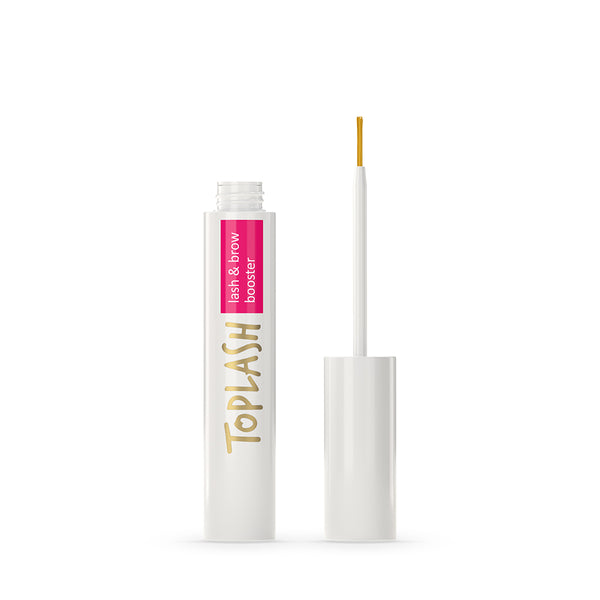
Recommended — prostaglandin-free triple-peptide
Toplash Lash & Brow Serum
MP-17 + BTP-1 + AT-3 with independent clinical data: +52.3% length and +31.9% volume at 8 weeks. Prostaglandin-free, paraben-free, ophthalmic-tested and extension-safe.
Shop Toplash SerumFrequently Asked Questions
Which is better — LiLash or GrandeLASH-MD?
Between the two, LiLash has the longer track record — over 19 years on the market, vegan and cruelty-free certified, and ophthalmologist-tested. GrandeLASH-MD at ~$32.50/mL is cheaper than LiLash at ~$45/mL. Critically, both contain prostaglandin analogues in the ICP (isopropyl cloprostenate) class, covered by EU SCCS/1680/25 (February 2026) ruling ICP cannot be considered safe for cosmetic lash use, and by Health Canada's 2019 ban. Neither has independent clinical trial data. Toplash at $16.63/mL is PGA-free and independently proven with +52.3% lash length in 8 weeks — the strongest choice in this comparison.
Does LiLash contain prostaglandins?
Yes. LiLash Purified Eyelash Serum contains isopropyl phenylhydroxypentene dihydroxycyclopentylheptanate — a prostaglandin analogue that Canadian cosmetic regulations list alongside isopropyl cloprostenate (ICP) as the same compound under alternative INCI nomenclature. This means LiLash's active is subject to the same regulatory findings as GrandeLASH's ICP: EU SCCS/1680/25 (February 2026) ruling ICP "cannot be considered safe" for cosmetic lash and brow use, and Health Canada's 2019 ban on ICP in cosmetics. Using a longer chemical name on the label does not change the compound's regulatory status.
Does GrandeLASH-MD contain prostaglandins?
Yes. GrandeLASH-MD contains isopropyl cloprostenate (ICP), a prostaglandin analogue. Health Canada banned ICP from cosmetics in 2019. The EU SCCS issued opinion SCCS/1680/25 in February 2026, ruling ICP "cannot be considered safe" for cosmetic use in lash and brow products. ICP works by extending the anagen (growth) phase of the eyelash cycle via prostaglandin F2α receptor agonism — the same mechanism responsible for documented side effects including iris darkening, periorbital fat atrophy, and rebound shedding.
Are LiLash and GrandeLASH-MD the same active ingredient?
Yes, in effect. LiLash uses the INCI chemical name isopropyl phenylhydroxypentene dihydroxycyclopentylheptanate while GrandeLASH-MD uses the common trade name isopropyl cloprostenate (ICP). Canadian cosmetic ingredient regulations list both names together as the same compound. Both are synthetic prostaglandin F2α receptor agonists with the same mechanism of action, same risk profile, and the same regulatory status. The key difference is transparency: LiLash's long INCI name is less recognisable to consumers than GrandeLASH's more direct "isopropyl cloprostenate" label.
Is LiLash or GrandeLASH-MD cheaper?
GrandeLASH-MD is cheaper per mL. At approximately $65 for 2 mL (~$32.50/mL), it costs considerably less than LiLash at $90 for 2 mL (~$45/mL). However, Toplash at $49.90 for 3 mL ($16.63/mL) is cheaper than both, is PGA-free, and is the only option in this comparison with an independent clinical trial verifying +52.3% lash length in 8 weeks. Paying a premium for LiLash's luxury branding does not add clinical substantiation or address the prostaglandin safety question.
Has LiLash faced regulatory action over its prostaglandin ingredient?
LiLash has not been subject to a product-specific recall, but its active ingredient is confirmed identical to ICP by Canadian regulatory databases. Health Canada banned ICP (and its synonyms including isopropyl phenylhydroxypentene dihydroxycyclopentylheptanate) from cosmetics in 2019 — both names are prohibited. EU SCCS/1680/25 (February 2026) ruled ICP "cannot be considered safe" for cosmetic lash use. These findings apply to the compound regardless of which INCI name appears on the label. LiLash's 19-year market presence predates both rulings, which accounts for its continued availability in some markets.
Is there a PGA-free alternative to both LiLash and GrandeLASH-MD?
Yes. Toplash Lash & Brow Serum is completely prostaglandin-free — no ICP, no isopropyl phenylhydroxypentene dihydroxycyclopentylheptanate, no DDDE, no MDN, no bimatoprost of any kind. Its triple-peptide complex (Myristoyl Pentapeptide-17, Biotinoyl Tripeptide-1, and Acetyl Tetrapeptide-3) stimulates the lash follicle through a completely different mechanism: peptide signal pathway activation that encourages follicle cell proliferation and keratin production without prostaglandin receptor involvement. Results: +52.3% lash length and +31.9% volume in 8 weeks, verified in an independent third-party clinical trial. At $49.90 for 3 mL ($16.63/mL), Toplash is 63% cheaper than LiLash and 49% cheaper than GrandeLASH per mL — with better evidence and zero prostaglandin risk.
Cosmetic Chemist & Board-Certified Trichology Specialist
Branda has evaluated over 200 lash and brow serums with a focus on ingredient safety and clinical substantiation. She advises clients on prostaglandin analogue risks and PGA-free alternatives. Her assessments are based on published regulatory opinions, peer-reviewed pharmacology, and independent clinical data.