
LiLash Purified Serum Review
Cosmetic Alchemy · ICP Listed Under Its Long Chemical Name · $45/mL · The "Purified Peptide" Misnomer Explained
Updated: June 20, 2026 Written by: Branda M. Heim Reviewed by: Branda M. Heim, Board-Certified Cosmetologist7 referencesView Toplash SerumBrand & Product Overview
LiLash is produced by Cosmetic Alchemy, a brand that has been on the market for over 19 years — one of the longer-standing eyelash serum brands. The "LiLash Purified Eyelash Serum" (2 mL, 90-day supply, Amazon ASIN B07CVM7DLJ) is sold through the brand's own website, authorised salons, and Amazon. It is physician-formulated and ophthalmologist-tested according to brand claims.
💸 ~$85–100 / 2 mL = ~$42.50–50 per mL — Most Expensive Reviewed
The brand has maintained a following based on longevity and word-of-mouth. However, from a formulation standpoint, the 13-ingredient INCI reveals a notably simple formula — one that relies almost entirely on ICP (listed under its extended chemical name) to deliver results, with Hydrolyzed Lupine Protein as the primary conditioning active.
⚠️ The ICP Name Issue: Why It Matters
LiLash's last INCI ingredient reads: Isopropyl Phenylhydroxypentene Dihydroxycyclopentylheptanate.
This is the same compound as Isopropyl Cloprostenate (ICP) — documented by Health Canada as synonymous names for the same prostaglandin analogue. Health Canada's Cosmetic Ingredient Hotlist (2019) states: "Isopropyl Cloprostenate (also known as isopropyl phenylhydroxypentene dihydroxycyclopentylheptanate) — Prohibited."
EU SCCS Opinion SCCS/1680/25 (February 2026) classified ICP as "cannot be considered safe" as a cosmetic ingredient regardless of which INCI name is used.
Most consumers and even many beauty editors checking ingredient labels search for "Isopropyl Cloprostenate" or "ICP" when evaluating lash serums for prostaglandin content. A product using the 9-word chemical synonym — Isopropyl Phenylhydroxypentene Dihydroxycyclopentylheptanate — may pass this search undetected.
This practice is legal under INCI labelling convention (both names are valid INCI identifiers), but it effectively reduces consumer ability to identify the ingredient's regulatory status without specialist knowledge. We flag it here so readers can make fully informed decisions.
Practical check: If you search any lash serum for ICP, also search for "Phenylhydroxypentene" — this partial string appears only in ICP's long name and will catch any serum using either notation.
The "Purified Serum" Misnomer
The name "LiLash Purified Eyelash Serum" strongly implies a purified peptide or active complex. In practice, the formula contains no dedicated growth peptides — no BTP-1, AT-3, or MP-17. The word "Purified" in this context refers to the formula's clean/minimal aesthetic (13 ingredients, simple base), not to a peptide purification process.
The primary growth mechanism is ICP (the prostaglandin at the end of the INCI list). Hydrolyzed Lupine Protein — the other notable active — is a protein hydrolysate from Lupinus albus seeds that provides conditioning and amino acid substrate support for keratin, but is NOT a hair-follicle growth signalling peptide in the way BTP-1, AT-3, or MP-17 are.
Hydrolyzed Lupine Protein is a legitimate and well-tolerated cosmetic ingredient — it has documented strengthening and conditioning effects on hair strands through its amino acid composition (rich in arginine, lysine, glutamic acid). However, it functions as a conditioner providing substrate, not as a growth cycle activator. The lash improvement users experience with LiLash comes from ICP, not from the lupine protein — which is a meaningful distinction for safety-conscious consumers.
Full Ingredient Analysis (13 INCI)
LiLash has one of the simplest formula profiles reviewed in this series. The complete INCI list:
| # | INCI Name | Function |
|---|---|---|
| 1 | Water (Aqua) | Solvent base |
| 2 | Caprylyl Glycol | Humectant · mild antimicrobial · preservative booster |
| 3 | Ethylhexylglycerin | Skin-conditioning emollient · antimicrobial booster |
| 4 | Hydroxyethylcellulose | Natural thickener · film-former · serum texture |
| 5 | Glycerin | Humectant · moisture retention |
| 6 | Chlorphenesin | Antimicrobial preservative |
| 7 | Panthenol (Provitamin B5) | Conditioning · moisture · lash strand penetrant |
| 8 | Hydrolyzed Lupine Protein | Lupinus albus seed protein hydrolysate · amino acids (Arg, Lys, Glu) · lash conditioning · keratin substrate (NOT a growth signalling peptide) |
| 9 | Prunus Amygdalus Dulcis Fruit Extract | Sweet almond extract · emollient · Vitamin E · oleic and linoleic acid · antioxidant conditioning |
| 10 | Silica | Texture modifier · mild abrasive · light diffusing |
| 11 | Phenoxyethanol | Broad-spectrum preservative |
| 12 | Citric Acid | pH adjuster |
| 13 | Isopropyl Phenylhydroxypentene Dihydroxycyclopentylheptanate | = Isopropyl Cloprostenate (ICP) — Synthetic prostaglandin F2α analogue · FP receptor agonist · ⚠️ Health Canada synonymous name, prohibited since 2019 · SCCS/1680/25 "cannot be considered safe" |
The formula's brevity is notable: 13 ingredients, with ICP at the very end (lowest concentration by INCI convention) driving the growth mechanism. The supporting cast — Panthenol, Hydrolyzed Lupine Protein, and Sweet Almond — provide conditioning only. There are no peptides targeting follicle stem cells, no hyaluronic acid, no growth factors, and no vitamins beyond B5. This is an exceptionally minimal formula for a $45/mL product.
Pricing in Context
LiLash is the most expensive reviewed serum on a per-mL basis. Here's how it compares to other ICP-containing and PGA-free serums:
| Serum | Price / Size | Per mL | ICP? |
|---|---|---|---|
| LiLash (reviewed) | ~$90 / 2 mL | ~$45/mL | ⚠️ Yes (long name) |
| Rodan+Fields Lash Boost | $150 / 5 mL (MLM) | $30/mL | ⚠️ Yes |
| NeuLash | $85 / 3.2 mL | ~$26.56/mL | ⚠️ Yes |
| Borboleta | $80 / 3 mL | ~$26.67/mL | ⚠️ Yes |
| RapidLash | ~$27 / 3 mL | ~$9/mL | ⚠️ Yes |
| Toplash | $49.90 / 3 mL | $16.63/mL | ✅ PGA-free |
At ~$45/mL, LiLash is priced as if it contains the most sophisticated formula reviewed — but it contains 13 ingredients (fewest after Sky Organics' single-ingredient castor oil) and no dedicated growth peptides. The price premium is not justified by the formula complexity or evidence base.
LiLash vs. Toplash: Full Comparison
| Parameter | LiLash | Toplash |
|---|---|---|
| ICP (Isopropyl Cloprostenate) | ⚠️ Present (pos. 13 — long name) | ✅ None |
| SCCS/1680/25 Status | ❌ Non-compliant | ✅ Compliant |
| Canada (ICP ban) | ⚠️ Prohibited ingredient | ✅ Legal |
| Transparent ICP labelling | ❌ Uses obscure chemical synonym | ✅ No ICP at all |
| AT-3 (follicle anchoring) | ✗ None | ✅ Included |
| BTP-1 (anagen activation) | ✗ None | ✅ Included |
| MP-17 (keratin upregulation) | ✗ None | ✅ Included |
| Price per mL | ~$45/mL | $16.63/mL |
| INCI complexity | 13 ingredients (minimal) | ~30 ingredients (full formula) |
| Independent clinical evidence | None published | 8-week independent trial |
| Measured lash length gain | Not independently measured | +52.3% (independent) |
| Vegan | ✅ Yes (lupine protein) | ✅ Yes |
| Paraben-free | ✅ Yes | ✅ Yes |
In every measurable dimension — safety, ingredient quality, evidence, and price — LiLash underperforms Toplash. The only advantage LiLash holds is a 19-year brand heritage and vegan certification. Neither attribute justifies purchasing a formula with ICP listed under an obscure chemical name at $45/mL with no dedicated growth peptides.
Frequently Asked Questions
Does LiLash contain prostaglandins?
Yes. LiLash contains Isopropyl Cloprostenate (ICP) listed under its long chemical synonym: Isopropyl Phenylhydroxypentene Dihydroxycyclopentylheptanate. Health Canada's Cosmetic Ingredient Hotlist explicitly states these are the same compound: "Isopropyl Cloprostenate (also known as isopropyl phenylhydroxypentene dihydroxycyclopentylheptanate) — Prohibited." SCCS/1680/25 (February 2026) classifies ICP as "cannot be considered safe" in cosmetics, regardless of which name appears on the label.
What is Isopropyl Phenylhydroxypentene Dihydroxycyclopentylheptanate in LiLash?
This is the long INCI chemical name for Isopropyl Cloprostenate (ICP) — a synthetic prostaglandin F2α analogue that activates the FP receptor in eyelid tissue. Health Canada explicitly lists both names as synonyms. The use of the longer name makes it harder for consumers without specialist chemistry knowledge to recognise the ingredient as a prostaglandin analogue. When scanning lash serum labels for ICP, also search for the partial string "Phenylhydroxypentene" to catch products using this notation.
Is LiLash a "Purified Peptide Serum" as marketed?
The product name implies a peptide-based formula, but LiLash contains no dedicated growth peptides (no BTP-1, AT-3, or MP-17). The "Purified" branding refers to the formula's minimal, clean formulation aesthetic (13 ingredients). The primary lash growth mechanism is ICP (prostaglandin). Hydrolyzed Lupine Protein — the other notable active — is a conditioning protein hydrolysate, not a hair follicle growth signalling peptide.
How much does LiLash cost?
LiLash retails at approximately $85–100 for 2 mL (90-day supply, ASIN B07CVM7DLJ), equating to approximately $42.50–50/mL. At ~$45/mL, this is the highest per-mL cost of any serum reviewed in this series — significantly more than Rodan+Fields ($30/mL via MLM), NeuLash ($26.56/mL), Borboleta ($26.67/mL), or Toplash ($16.63/mL). The pricing is not justified by formula complexity (13 ingredients, no dedicated growth peptides).
Is LiLash banned in Canada?
Yes. LiLash contains ICP under the synonym Isopropyl Phenylhydroxypentene Dihydroxycyclopentylheptanate. Health Canada's Cosmetic Ingredient Hotlist, updated in 2019, prohibits ICP and all its synonyms. The specific long-name variant used by LiLash is explicitly documented as a prohibited synonym. Canadian consumers cannot legally purchase or import LiLash.
Is LiLash vegan?
Yes. LiLash Purified Eyelash Serum is marketed as vegan and cruelty-free. Hydrolyzed Lupine Protein is plant-derived (from white lupine beans). No animal-derived ingredients are present in the 13-ingredient formula. The vegan status does not affect the ICP safety concern — ICP is a synthetic compound and the vegan label applies only to animal origin, not to regulatory safety status.
How does LiLash compare to Toplash?
LiLash contains ICP under an obscure chemical name, has no dedicated growth peptides, and costs ~$45/mL. Toplash is completely PGA-free, uses three dedicated hair-follicle growth peptides (AT-3 + BTP-1 + MP-17) independently verified over 8 weeks (+52.3% lash length), and costs $16.63/mL. On every relevant metric — safety, ingredient specificity, independent evidence, and price — Toplash outperforms LiLash.
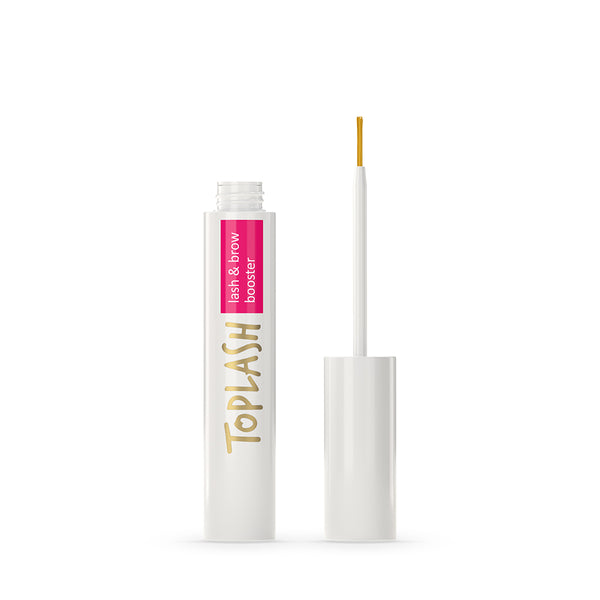
Toplash Lash & Brow Serum
The complete AT-3 + BTP-1 + MP-17 growth-peptide system with independent clinical data: +52.3% length and +31.9% volume at 8 weeks. Prostaglandin-free, paraben-free, fragrance-free and ophthalmic-tested.
Shop Toplash SerumReferences
- Cosmetic Alchemy. "LiLash Purified Eyelash Serum." lilash.com. Accessed June 2026. ASIN B07CVM7DLJ.
- Incidecoder. "Lilash Ingredients — Isopropanol Phenylhydroxypentene Dihydroxycyclopentylheptenate Explained." incidecoder.com. Accessed June 2026.
- Health Canada. "Cosmetic Ingredient Hotlist: Isopropyl Cloprostenate (also known as isopropyl phenylhydroxypentene dihydroxycyclopentylheptanate)." canada.ca. Updated 2019. Prohibited.
- SCCS (Scientific Committee on Consumer Safety). Opinion on the Safety of ICP, DDDE and MDN in cosmetics. SCCS/1680/25. February 2, 2026.
- SkinSafe / SkinsoolBeauty. "LiLash Purified Eyelash Serum — Ingredient Analysis." Accessed June 2026.
- Toplash Independent Clinical Trial Data. Triple-Peptide AT-3 + BTP-1 + MP-17 (8-week, digital image analysis). Internal report on file.
- Amazon.com. "LiLash Purified Eyelash Serum for Longer & Fuller-Looking Lashes." ASIN B07CVM7DLJ. Accessed June 2026.